Rethinking How Businesses Build Teams
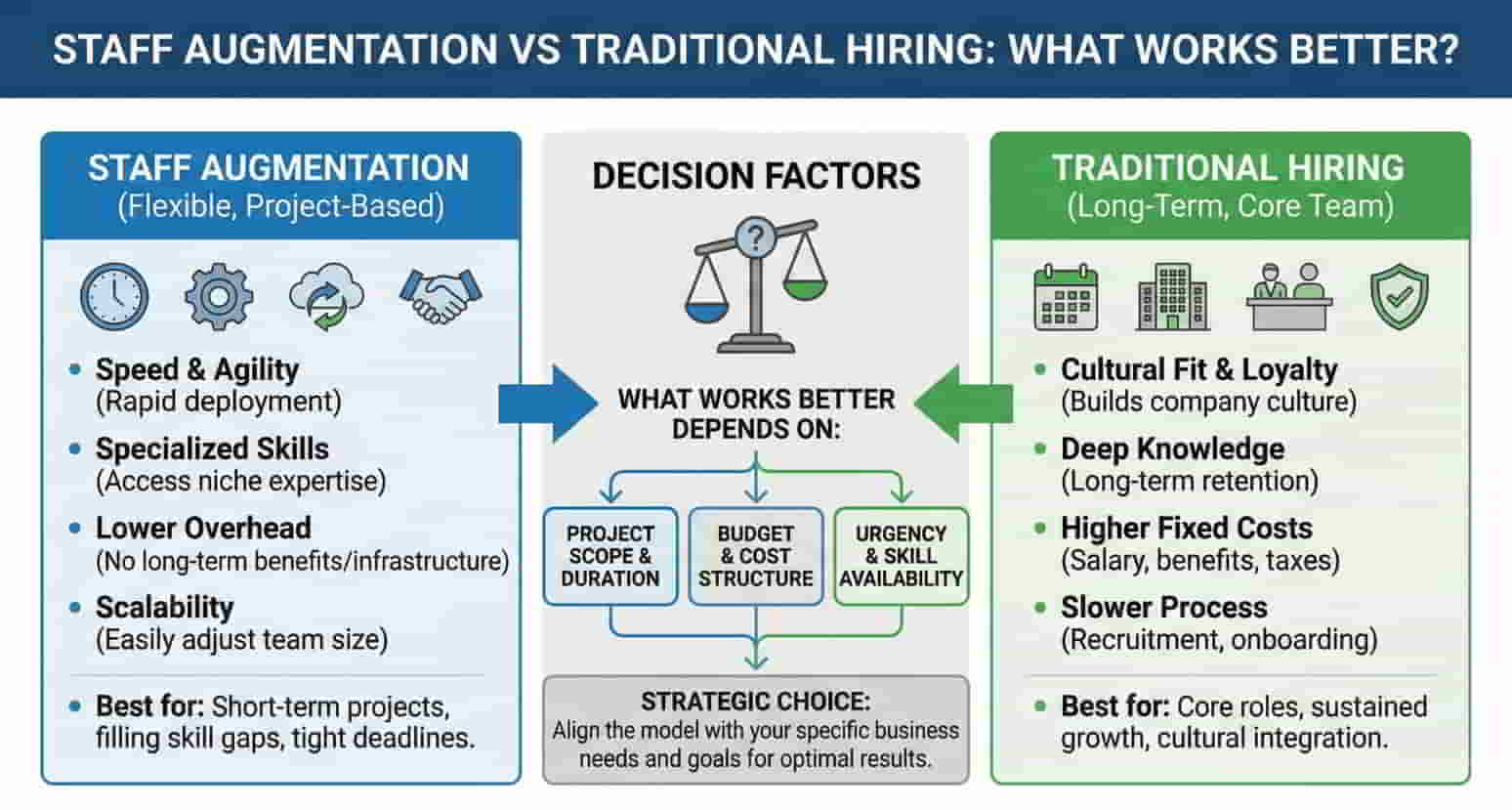
As technology evolves and project demands fluctuate, businesses are under pressure to build teams faster, smarter, and more cost-effectively. One of the most common questions leaders face today is whether to rely on staff augmentation or continue with traditional hiring.
Both approaches have their place—but they serve very different business needs. Understanding the differences is critical to choosing the right workforce strategy.
What Is Staff Augmentation?
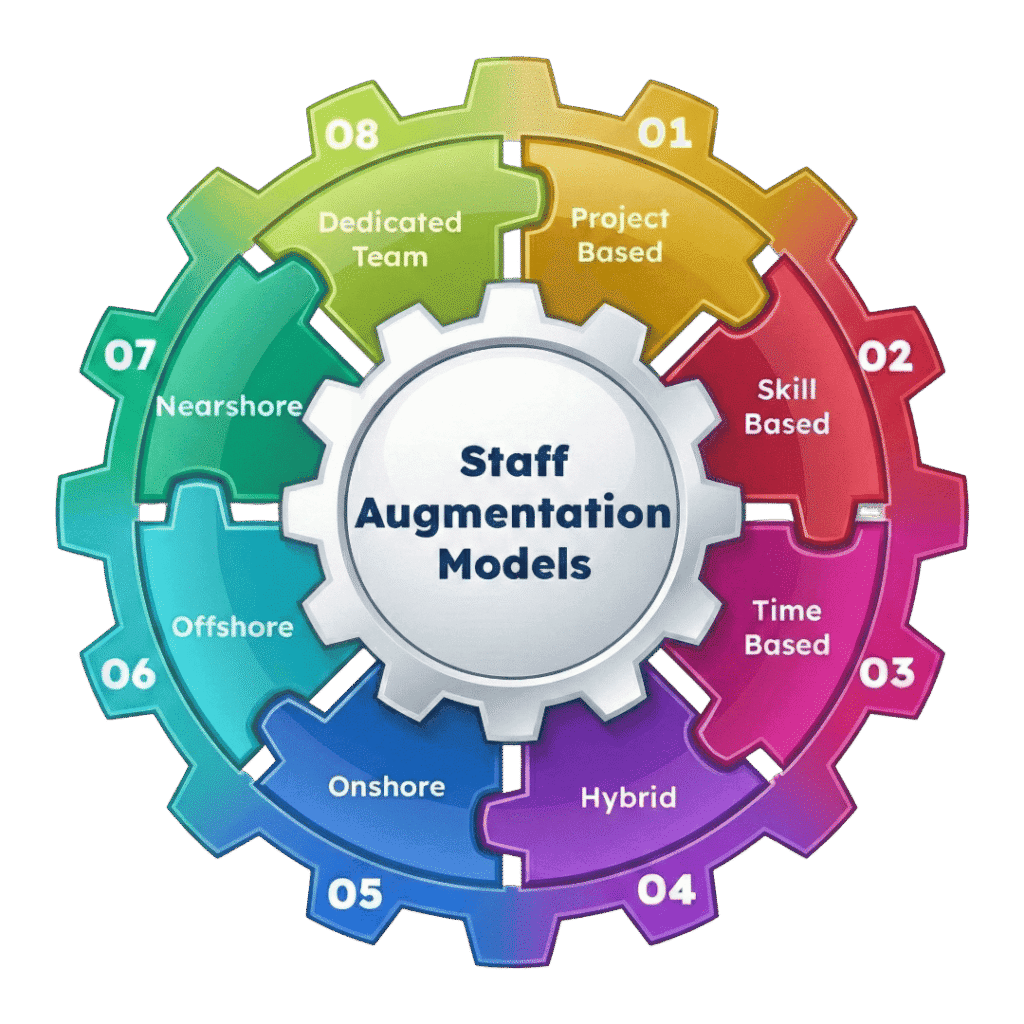
Staff augmentation is a flexible staffing model where businesses temporarily add skilled professionals to their existing teams to meet specific project or capacity needs.
It allows organizations to access:
- Specialized skills on demand
- Short- to mid-term technical expertise
- External talent integrated directly into internal teams
This model is widely used in IT staff augmentation and technology-driven projects.
What Is Traditional Hiring?

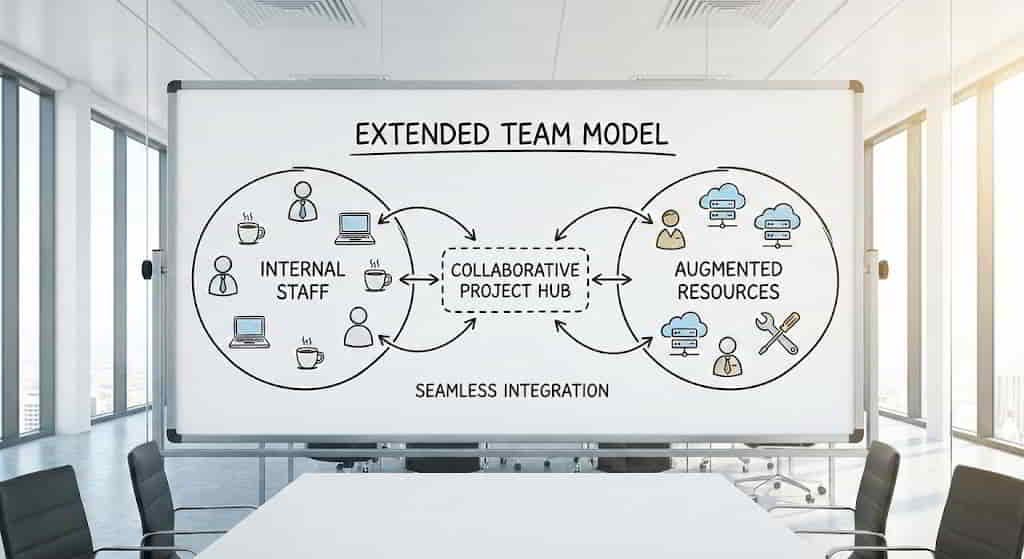
Traditional hiring involves recruiting full-time employees through a long-term employment model.
Key Characteristics:
- Permanent roles
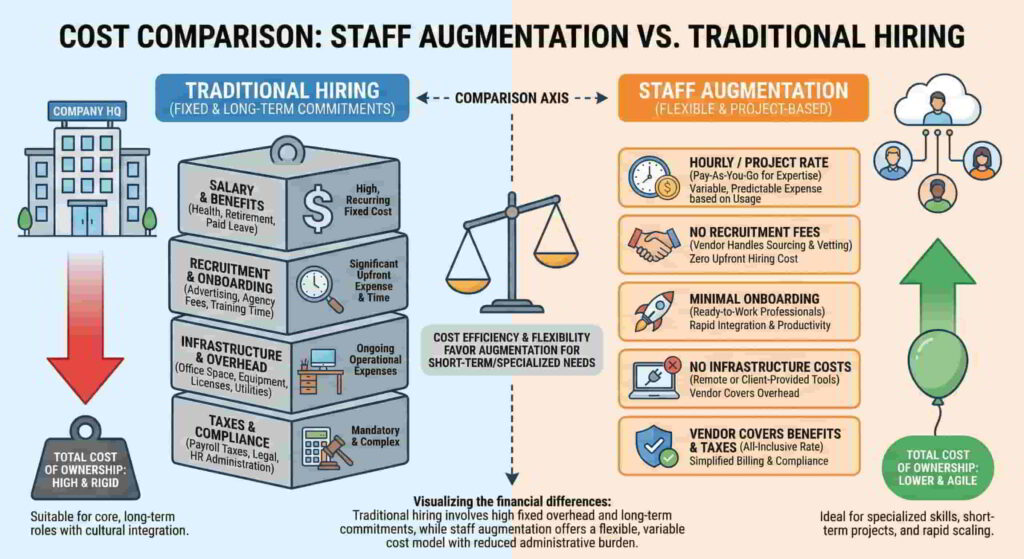
- Fixed salaries and benefits
- Long onboarding cycles
- Long-term organizational commitment
This model works well for stable, predictable workloads but can struggle in fast-changing environments.
Key Differences: Staff Augmentation vs Traditional Hiring
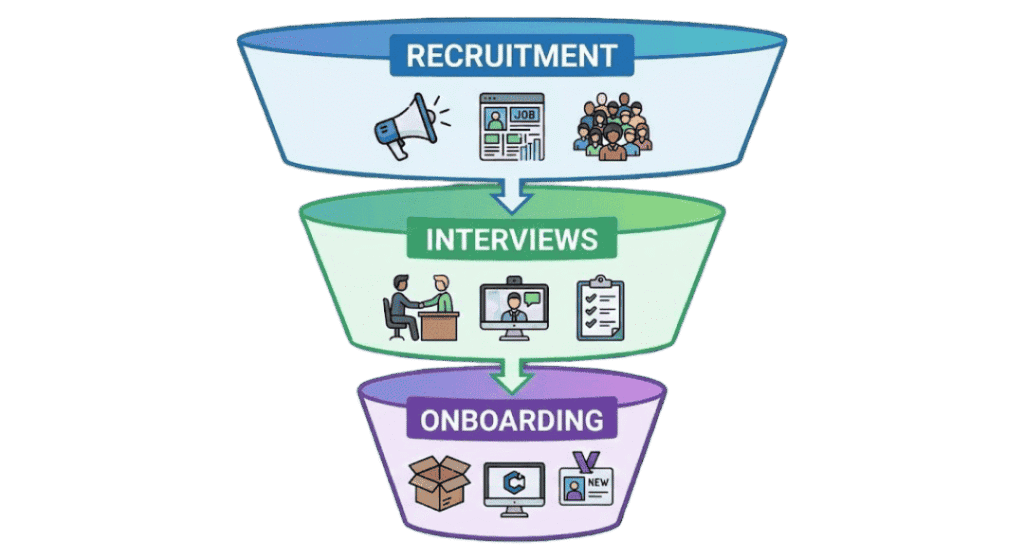
| Criteria | Staff Augmentation | Traditional Hiring |
|---|---|---|
| Hiring Speed | Fast | Slow |
| Cost Structure | Variable | Fixed |
| Flexibility | High | Low |
| Skill Specialization | On-demand | Limited |
| Long-Term Commitment | Optional | Required |
| Scalability | Easy | Difficult |
Advantages of Staff Augmentation
1. Faster Access to Skilled Talent
With contract staffing, businesses can onboard professionals in weeks—or even days—instead of months.
2. Flexibility and Scalability
Staff augmentation allows organizations to:
- Scale teams up or down as needed
- Adjust skill sets mid-project
- Respond quickly to changing requirements
This flexibility is especially valuable for IT and digital initiatives.
3. Cost Efficiency
Unlike traditional hiring, staff augmentation:
- Avoids long-term salary and benefit costs
- Reduces recruitment overhead
- Converts fixed costs into variable costs
Advantages of Traditional Hiring
1. Long-Term Organizational Stability
Permanent employees:
- Retain institutional knowledge
- Align closely with company culture
- Support long-term operational continuity
2. Strong Internal Ownership
Full-time employees often show:
- Deeper engagement
- Long-term accountability
- Strong alignment with company goals
Traditional hiring remains effective for core, ongoing roles.
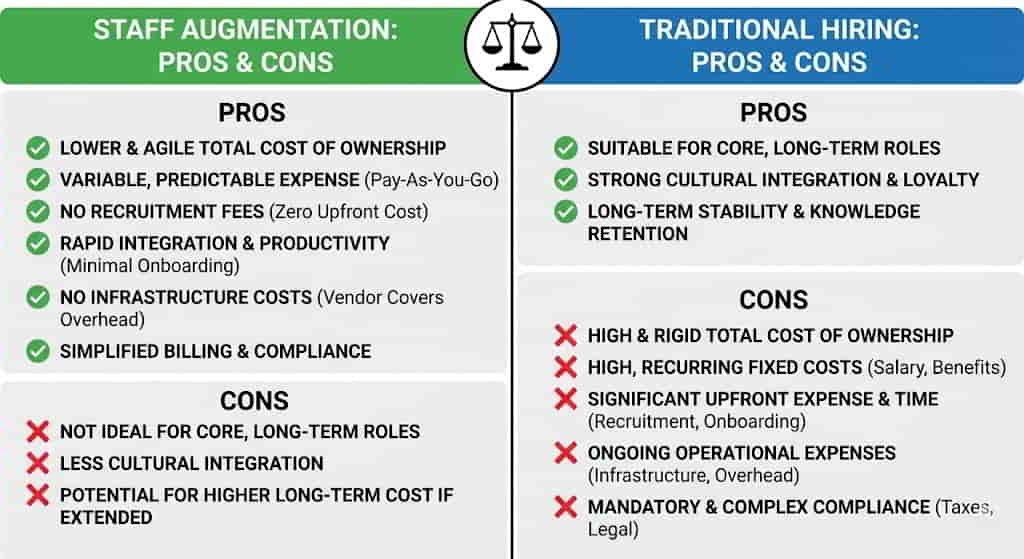
Limitations of Each Model
Staff Augmentation Limitations
- Not ideal for core leadership roles
- Requires strong internal management
- Knowledge retention may be limited
Traditional Hiring Limitations
- Slow recruitment cycles
- High fixed costs
- Risk of skill mismatch
- Limited flexibility
Understanding these trade-offs is essential for informed decision-making.
When Staff Augmentation Works Best
Staff augmentation is ideal for:
- IT and software development projects
- Cloud and data initiatives
- Short- to mid-term workload spikes
- Accessing niche technical skills
Organizations leveraging IT staff augmentation gain speed without long-term risk.
When Traditional Hiring Makes More Sense
Traditional hiring works best when:
- Roles are core to long-term operations
- Workloads are stable and predictable
- Cultural integration is critical
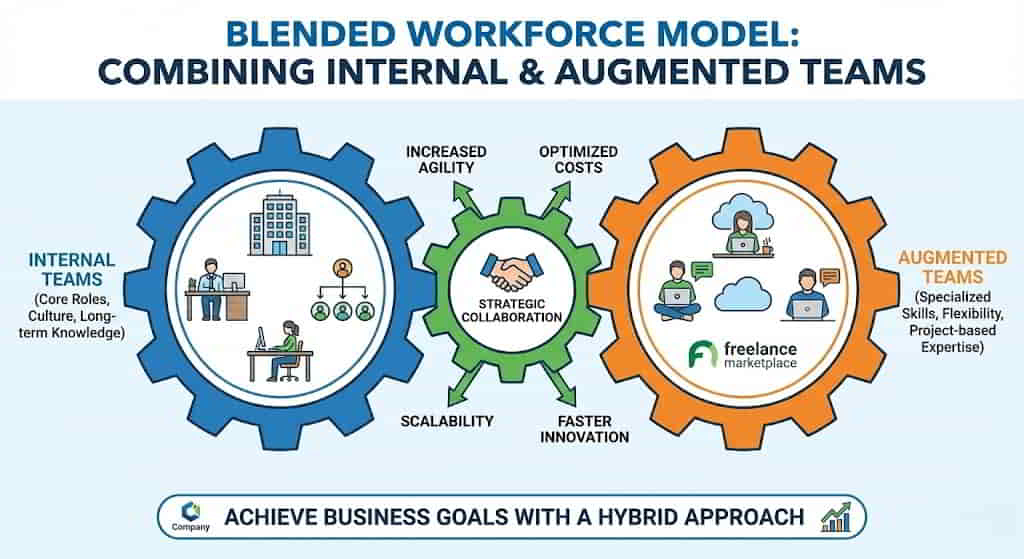
A balanced workforce strategy often combines both models.
How DBS Helps Businesses Choose the Right Model
At DBS, we help organizations align workforce strategy with business goals.
Our Approach:
- Assess project scope and timelines
- Identify required skills and duration
- Provide flexible staff augmentation solutions
- Support scalable and cost-effective team growth
We enable businesses to stay agile without compromising quality.
Conclusion: It’s Not Either–Or, It’s About Fit
The choice between staff augmentation and traditional hiring isn’t about which model is better—it’s about which model fits your current business needs.
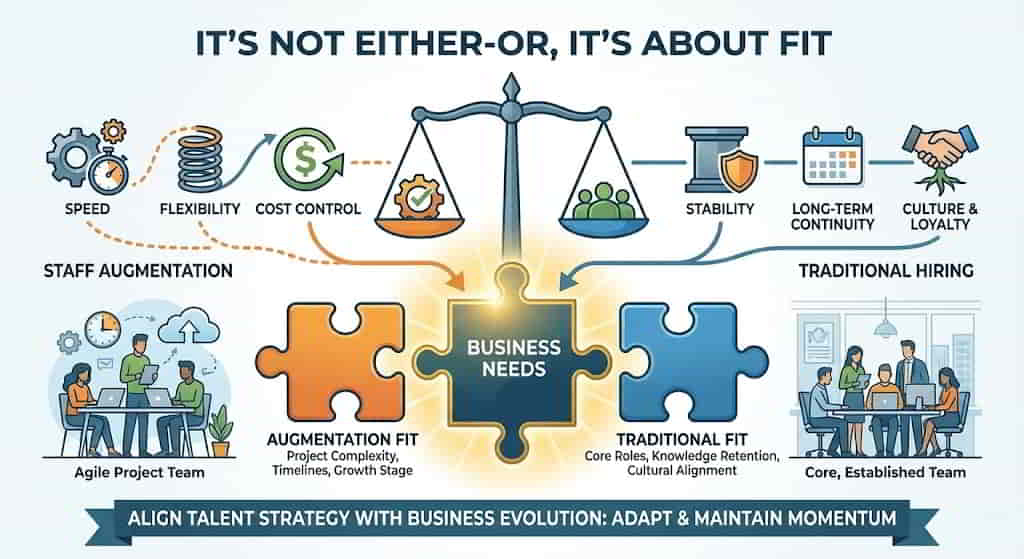
Staff augmentation delivers speed, flexibility, and cost control, while traditional hiring provides stability and long-term continuity. Organizations that understand when to use each approach build stronger, more resilient teams.
By aligning talent strategy with project complexity, timelines, and growth stage, businesses can stay agile without compromising on quality or culture. The most successful organizations treat workforce models as strategic tools—adapting them as priorities evolve to maintain momentum and competitive advantage.
This balanced approach enables teams to scale intelligently, respond faster to change, and maximize the impact of their talent investments.
Need to scale your team quickly without long-term hiring risk?
Partner with DBS to explore flexible staff augmentation solutions.