Choosing the Right Website Approach for Your Business
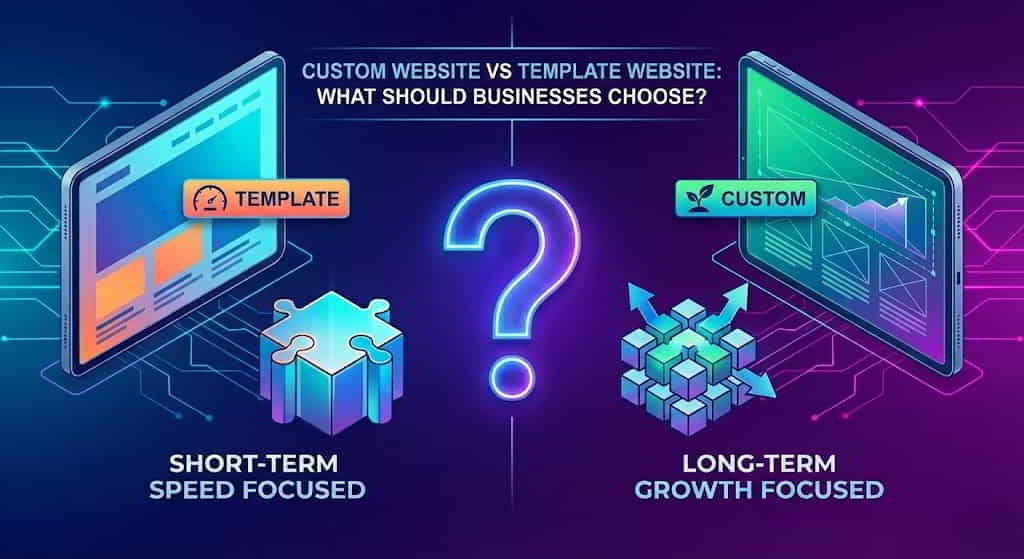
A business website is one of the most important digital investments an organization makes. It represents your brand, supports lead generation, enables customer engagement, and often acts as a core sales channel. One of the first strategic decisions businesses face is whether to choose custom website development or rely on a pre-built template website.
While templates may seem faster and cheaper upfront, the long-term implications on performance, scalability, and business outcomes can be significant. Choosing the right approach depends on your website strategy, growth plans, and operational needs.
Understanding Template Websites
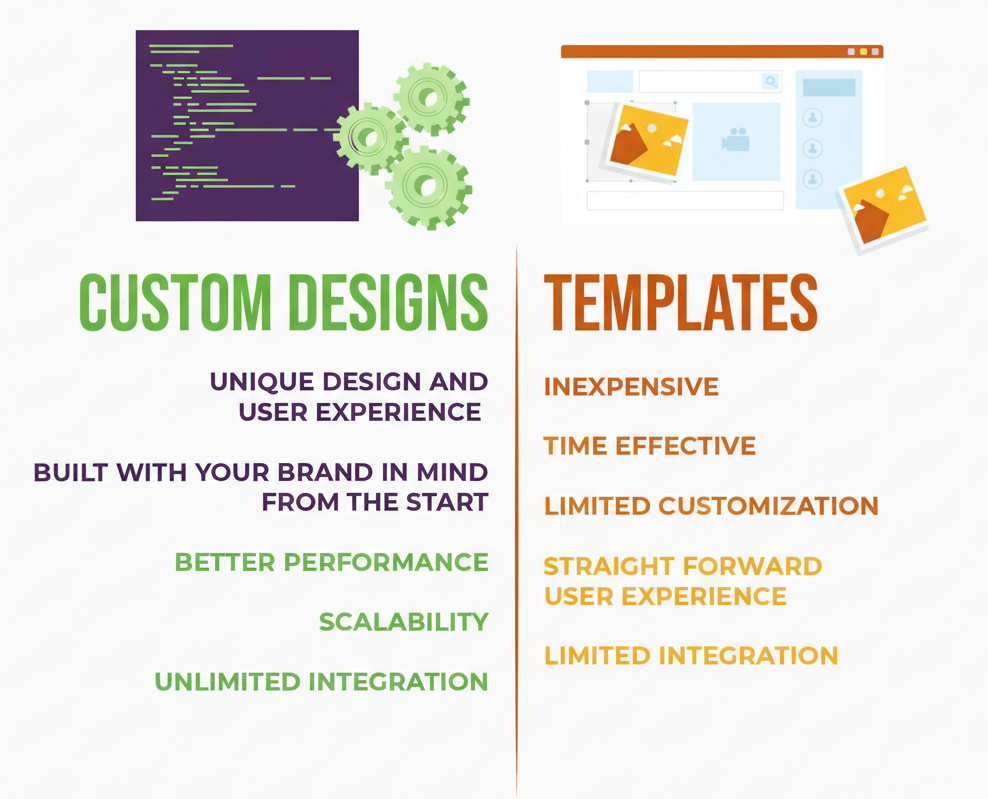
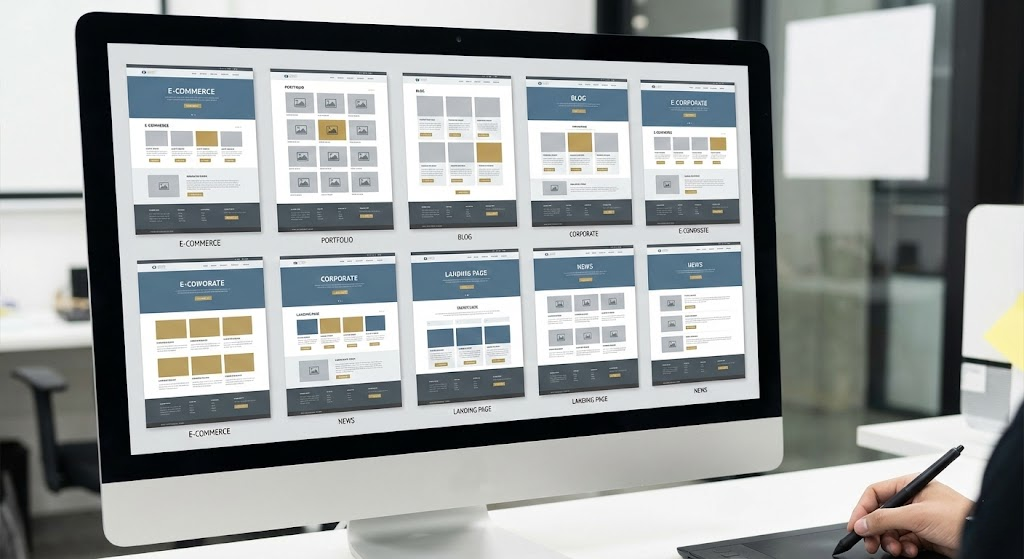
Template websites are built using pre-designed layouts and structures. These are commonly offered through themes, website builders, or ready-made design frameworks.
Key Characteristics of Template Websites:
- Fixed layouts and design patterns
- Limited customization flexibility
- Faster setup and launch
- Lower upfront cost
Template websites are often used by early-stage businesses or for short-term digital needs.
Understanding Custom Website Development
Custom website development involves designing and building a website from the ground up—aligned specifically with a business’s goals, workflows, and audience.
Key Characteristics of Custom Websites:
- Tailored UI/UX design
- Scalable architecture
- Performance-first development
- Integration-ready structure
Custom websites are built to support long-term growth, not just quick launches.
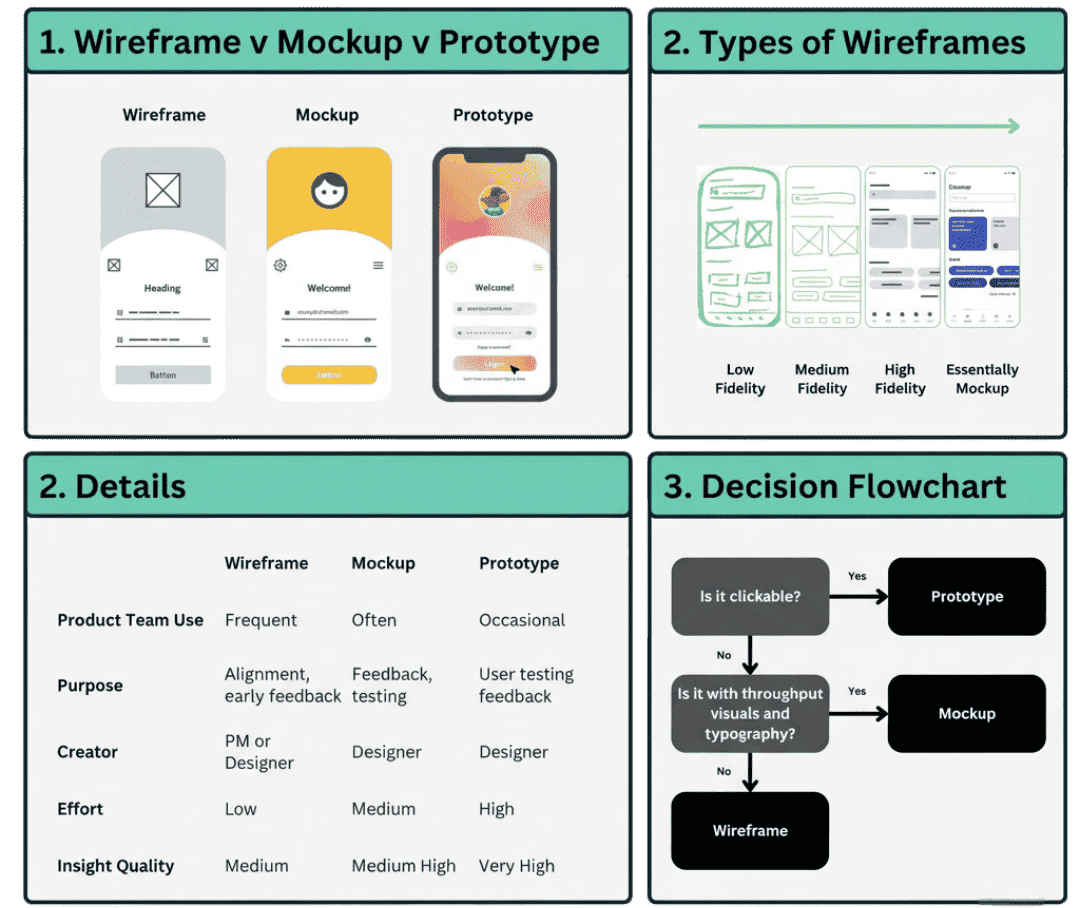
Key Differences Between Custom and Template Websites
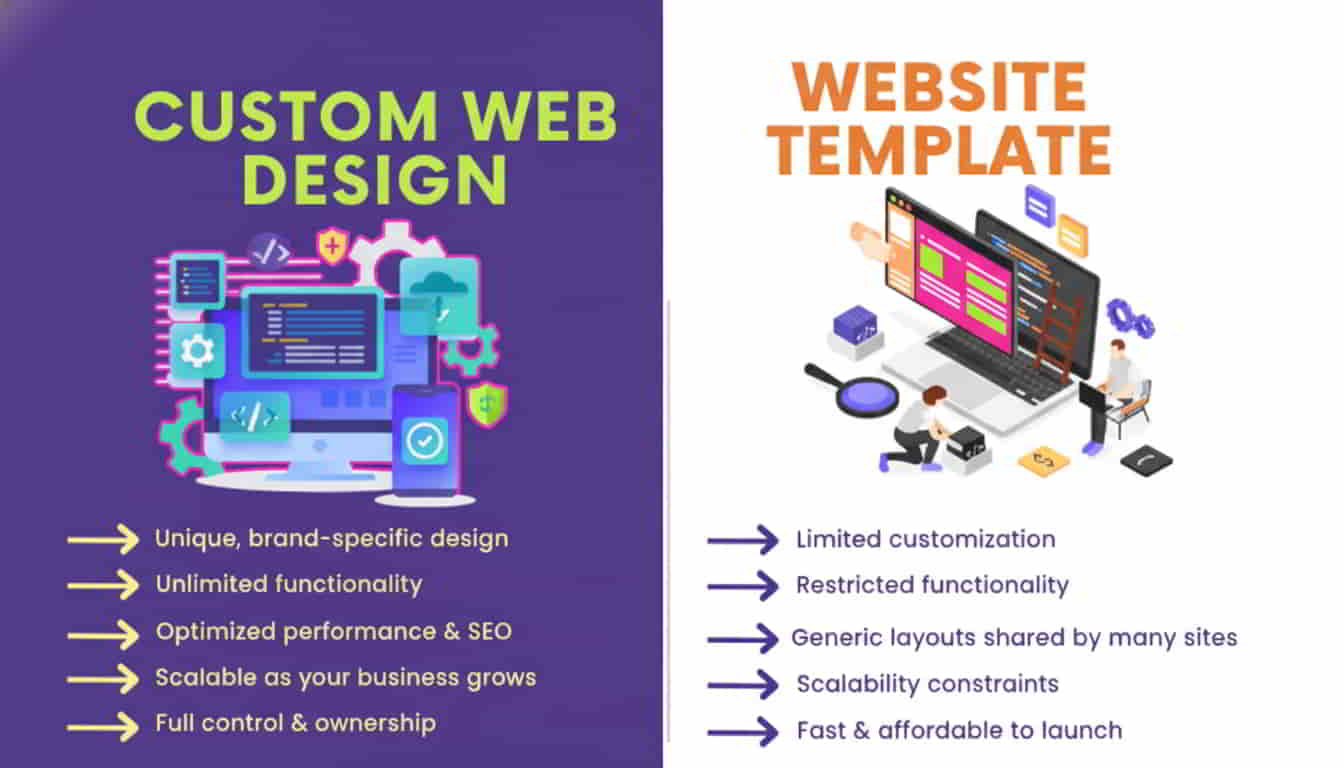
| Aspect | Template Website | Custom Website Development |
|---|---|---|
| Design Flexibility | Limited | Fully tailored |
| Performance | Often bloated | Optimized for speed |
| Scalability | Low | High |
| Brand Differentiation | Minimal | Strong |
| Long-Term Cost | Higher over time | Optimized over lifecycle |
| Integration Capability | Restricted | Fully extensible |
When Template Websites Make Sense
Template websites can be a practical choice when:
- The business is at an early stage
- Budget constraints are significant
- The website has minimal functional requirements
- Speed to launch is the primary goal
For simple business websites with limited future expansion, templates may serve as a temporary solution.
Limitations of Template Websites for Growing Businesses
As businesses grow, template websites often become restrictive due to:
- Performance issues from heavy themes
- Design limitations that weaken branding
- Difficulty integrating advanced tools
- Poor scalability as traffic increases
What starts as a cost-saving decision can later require a full rebuild.
Why Custom Website Development Is Better for Long-Term Growth
1. Aligned With Business Strategy
Custom websites are built around your website strategy, ensuring:
- Clear conversion paths
- User journeys aligned with business goals
- Support for marketing and sales workflows
2. Superior Performance and Optimization
Custom builds focus on:
- Lightweight code
- Optimized asset loading
- Core Web Vitals compliance
This leads to faster load times, better SEO, and higher conversions.
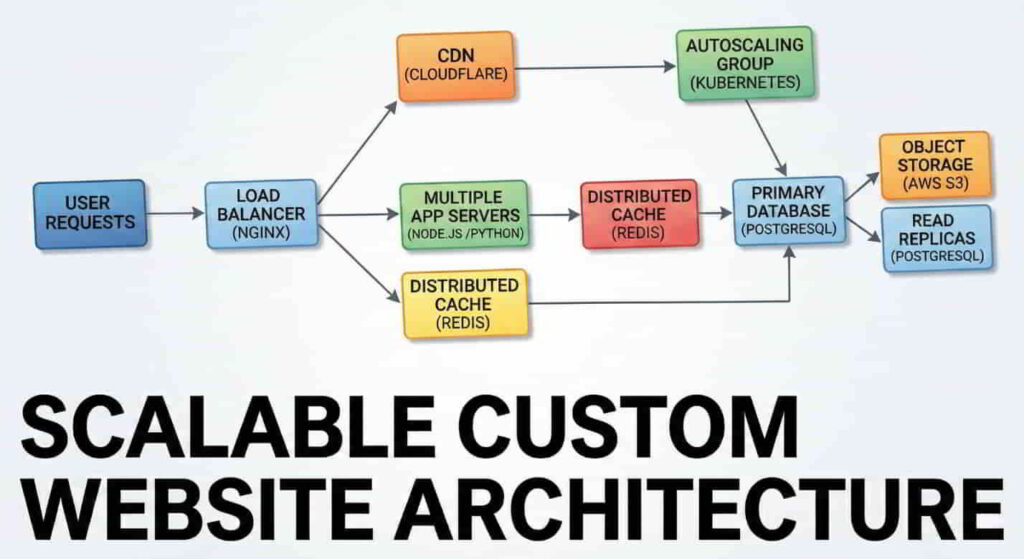
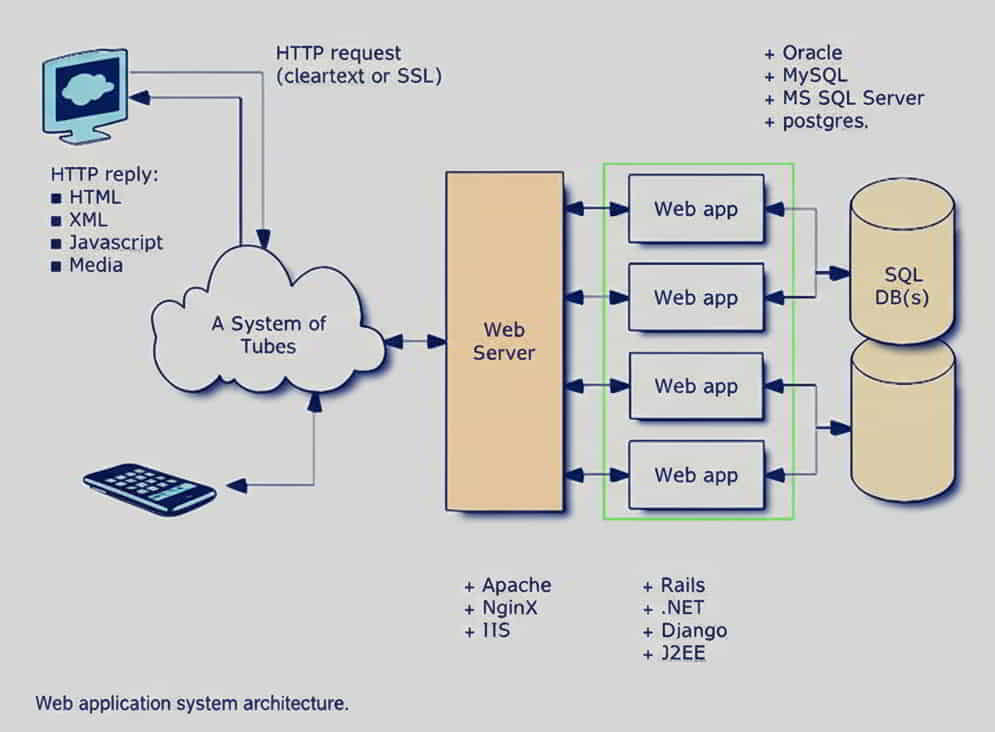
3. Scalability and Future-Readiness
With custom website development, businesses can:
- Add features without redesign
- Scale traffic and content
- Integrate CRMs, analytics, and automation tools
Scalability is planned—not forced.
4. Stronger Brand Differentiation
Templates often result in similar-looking websites. Custom websites:
- Reflect brand identity
- Build trust and credibility
- Create unique digital experiences
This differentiation is critical in competitive markets.
Cost Comparison: Short-Term vs Long-Term Value
While templates cost less initially, they often lead to:
- Performance optimization expenses
- Plugin conflicts and maintenance issues
- Redesign and migration costs
Custom websites offer better return on investment over time by reducing rework and supporting growth.
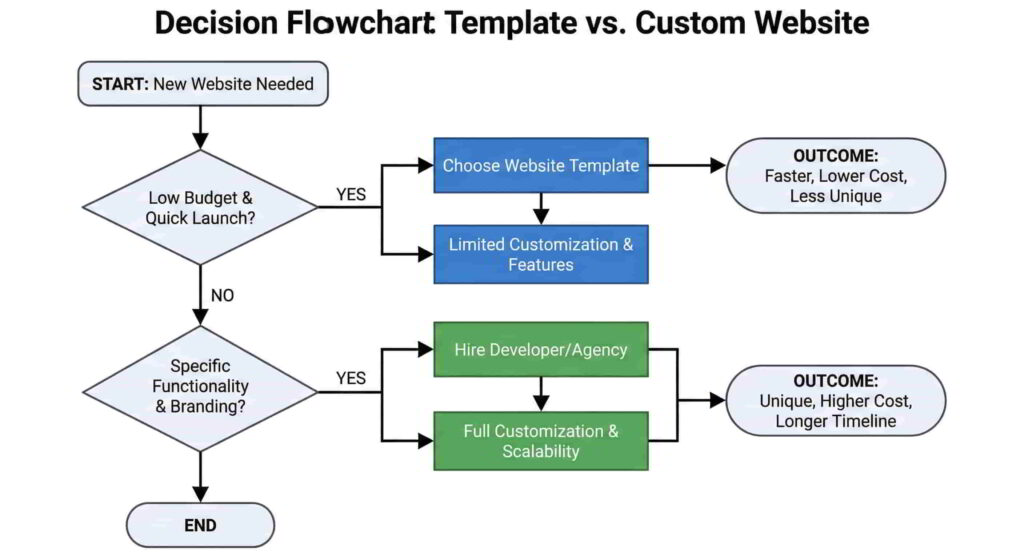
How to Choose the Right Option for Your Business
Ask these questions:
- Do we expect traffic and feature growth?
- Is our website a revenue driver or brand platform?
- Do we need integrations with internal systems?
- Is performance critical to conversions?
If the answer is yes to most, custom website development is the better choice.
How DBS Helps Businesses Make the Right Choice
At DBS, we don’t push one-size-fits-all solutions. We help businesses choose the right website strategy based on goals, scale, and budget.
Our Approach:
- Strategic website consultation
- Custom WordPress and scalable builds
- Performance-first architecture
- Conversion-focused UX
- Long-term maintainability
We build websites that support business growth—not just design trends.
Conclusion: Choose What Supports Your Growth, Not Just Speed
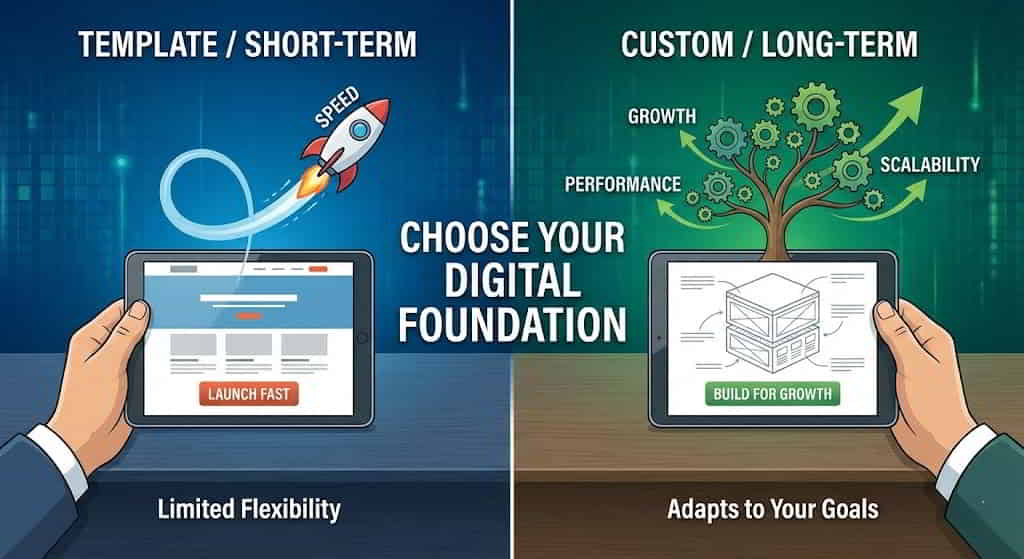
Template websites may work for short-term needs, but growing businesses require flexibility, performance, and scalability. Custom website development empowers organizations to align digital presence with long-term goals and evolving customer expectations.
The right website choice is not about speed or cost alone—it’s about building a digital foundation that grows with your business.
By investing in a solution tailored to your strategy, you gain control, differentiation, and the ability to adapt confidently as your business scales and market demands change.
Not sure which website approach fits your business?
Talk to DBS and get expert guidance on the right website strategy.