
Why Many Digital Strategies Often Underperforms
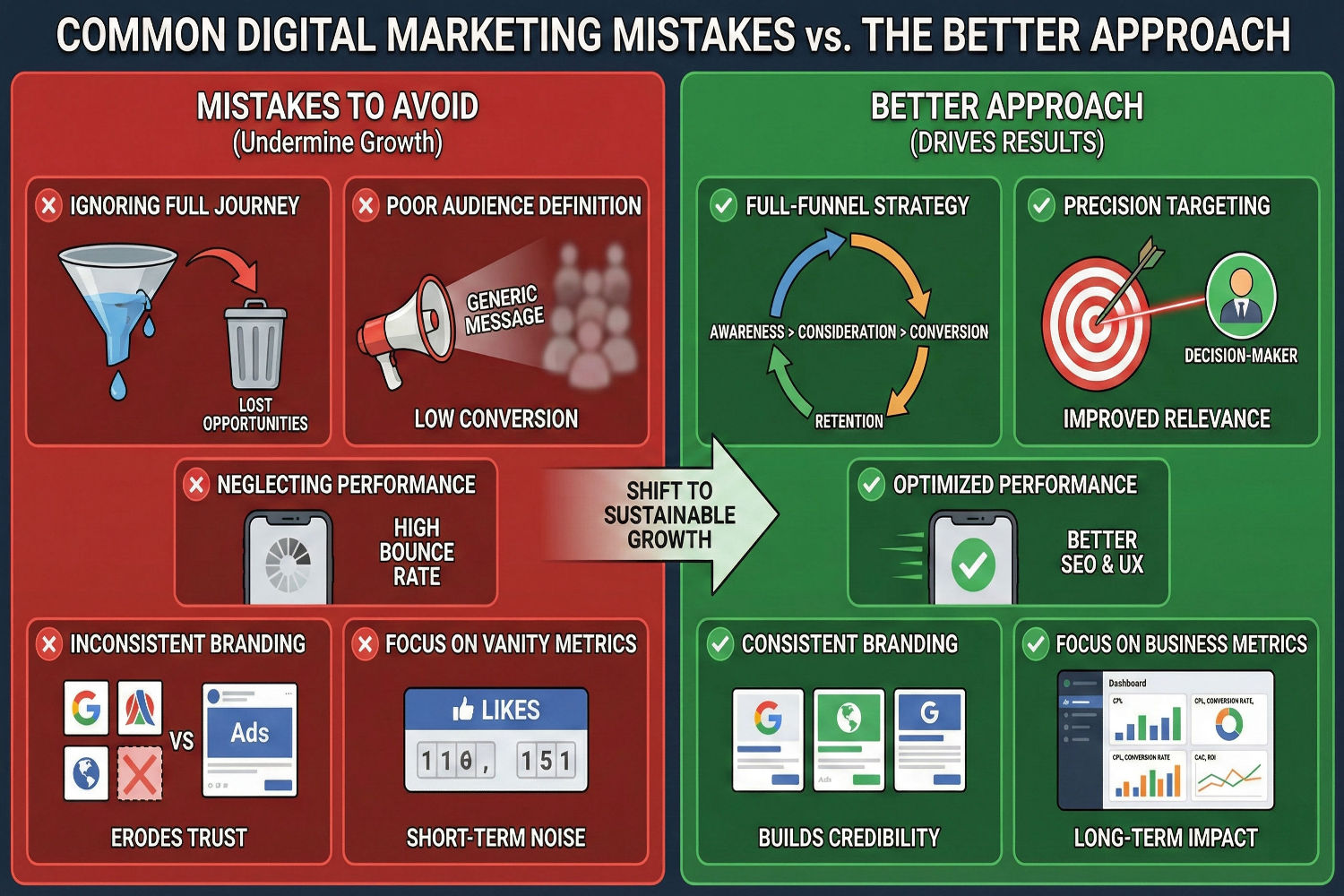
Many businesses invest significantly in digital marketing but struggle to see consistent returns. The issue is rarely a lack of tools or platforms—it’s usually a series of strategic and execution-level digital marketing mistakes that compound over time.
As competition increases and customer attention spans shrink, even small errors can result in lost visibility, wasted spend, and missed revenue opportunities. Identifying and correcting these mistakes is essential for sustainable growth.
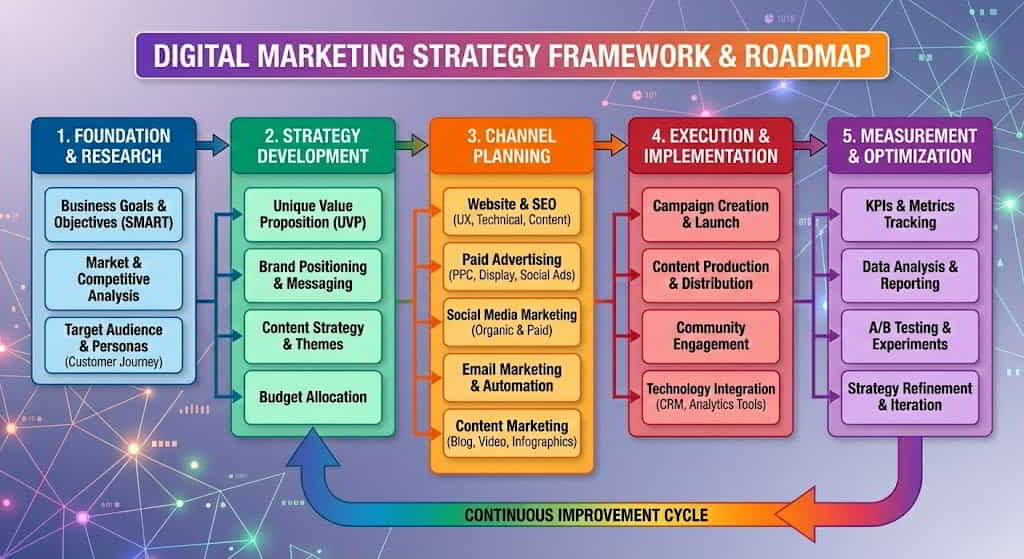
Mistake #1: Treating Digital Marketing as a Tactic, Not a Strategy
One of the most common online marketing errors is launching campaigns without a clear strategic foundation.
Why This Happens:
- Pressure to “do something quickly”
- Over-reliance on isolated channels (SEO, ads, social)
- Lack of alignment with business goals
Business Impact:
- Disconnected campaigns
- Inconsistent messaging
- Poor ROI measurement
A strong digital marketing strategy defines objectives, audiences, channels, budgets, and success metrics before execution begins.
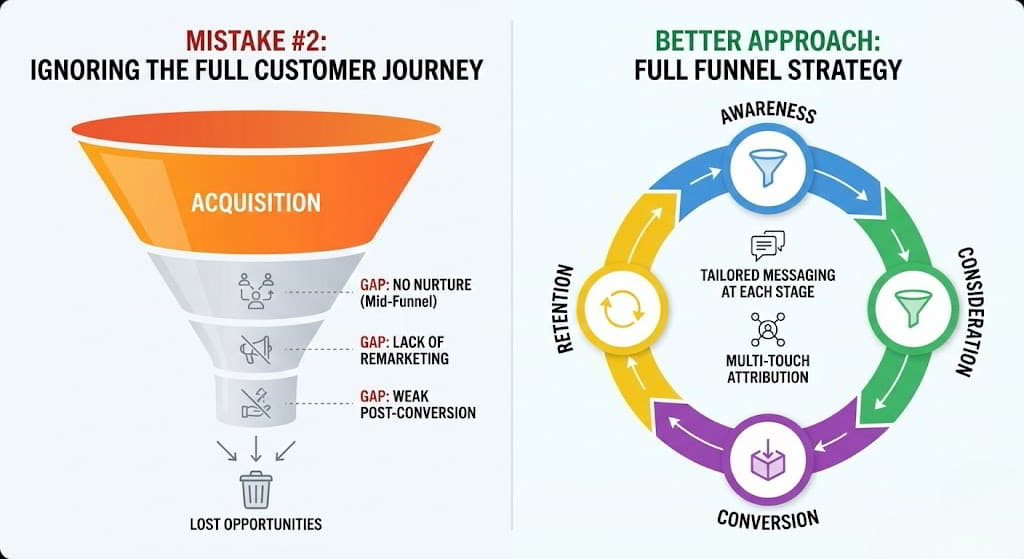
Mistake #2: Ignoring the Full Customer Journey
Many businesses focus only on acquisition and ignore the rest of the funnel.
Common Gaps:
- No nurture strategy for mid-funnel users
- Lack of remarketing
- Weak post-conversion engagement
This leads to lost opportunities, especially in B2B and high-consideration purchases.
Better Approach:
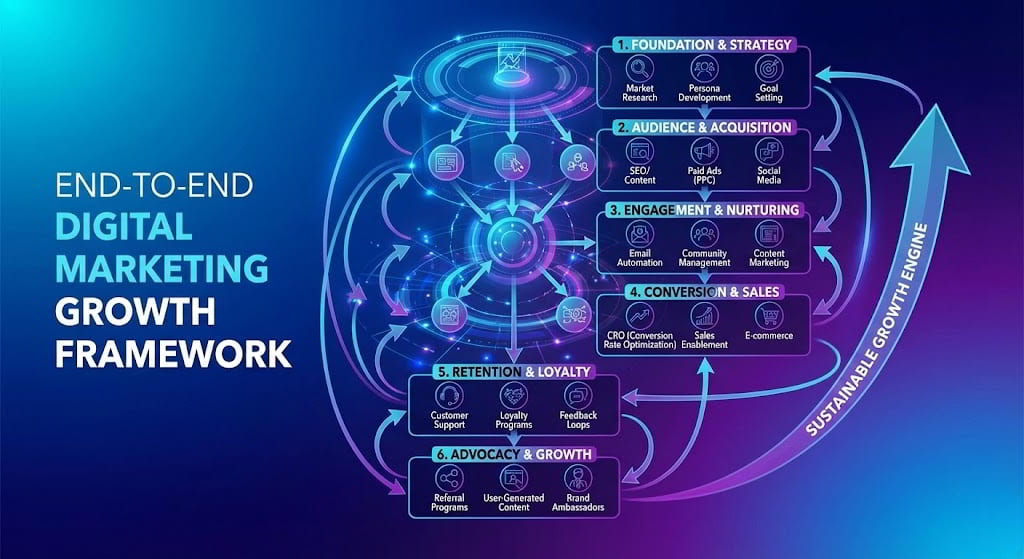
- Awareness → consideration → conversion → retention
- Tailored messaging at each stage
- Multi-touch attribution
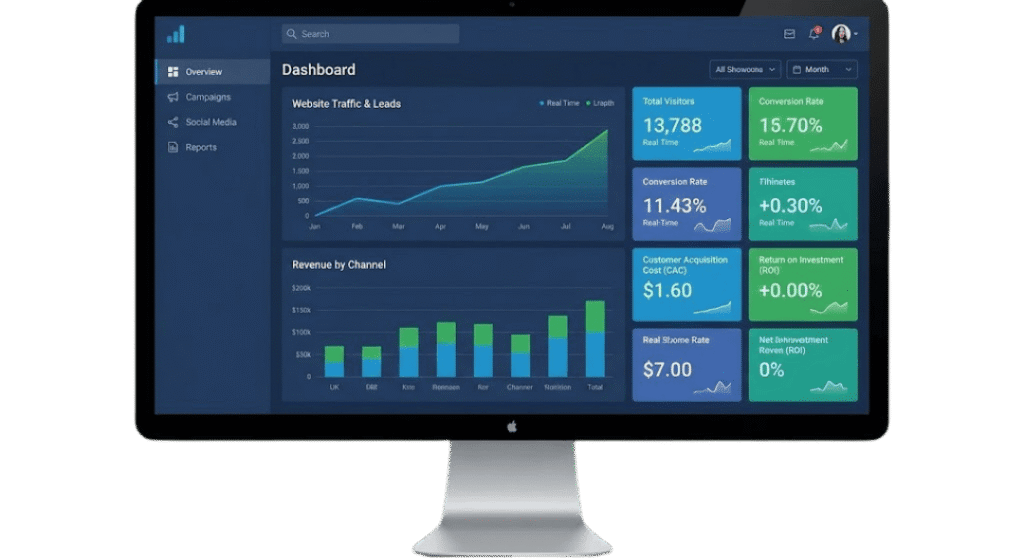
Mistake #3: Making Decisions Without Data and Insights
Failing to use analytics is one of the costliest digital marketing mistakes.
Typical Issues:
- No defined KPIs
- Tracking only impressions and clicks
- Ignoring attribution and funnel drop-offs
Without data, teams rely on assumptions instead of evidence.
What Data-Driven Marketing Enables:
- Continuous optimization
- Budget reallocation to high-performing channels
- Predictable growth
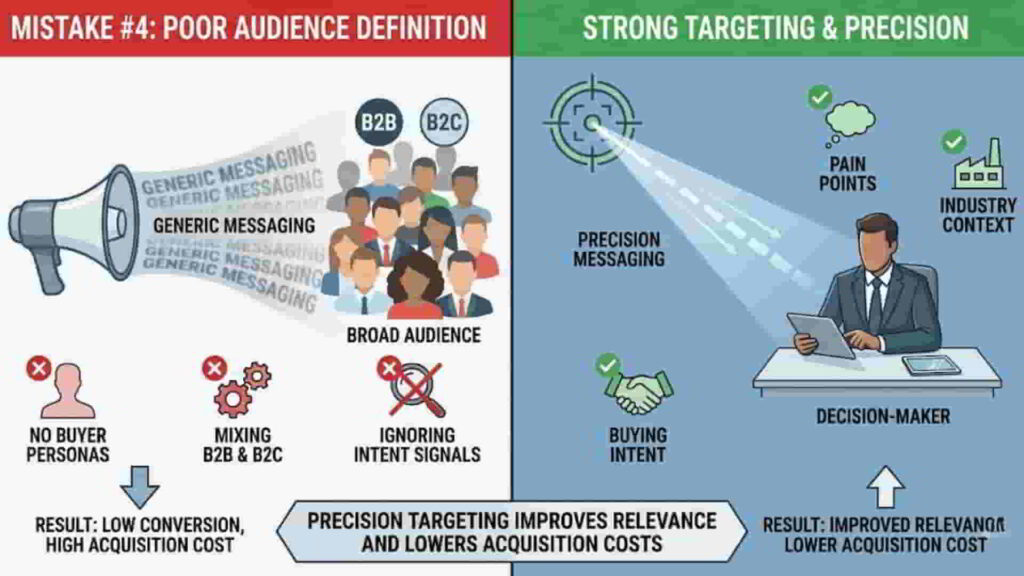
Mistake #4: Poor Audience Definition and Targeting
Generic messaging to broad audiences rarely converts.
Common Targeting Errors:
- No buyer personas
- Mixing B2B and B2C messaging
- Ignoring intent-based signals
Strong targeting focuses on:
- Decision-makers
- Pain points
- Industry context
- Buying intent
Precision targeting improves relevance and lowers acquisition costs.
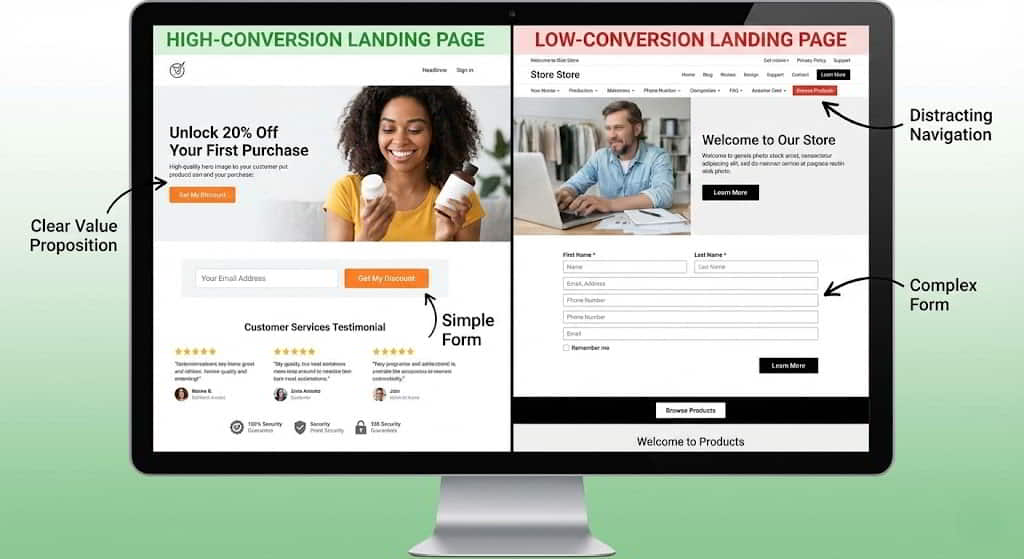
Mistake #5: Sending Traffic to Weak Landing Pages
Even the best campaigns fail when landing pages are poorly optimized.
Common Landing Page Problems:
- Slow page speed
- Unclear value proposition
- Weak or hidden CTAs
- Lack of trust signals
Marketing success depends on conversion-focused design, not just traffic volume.
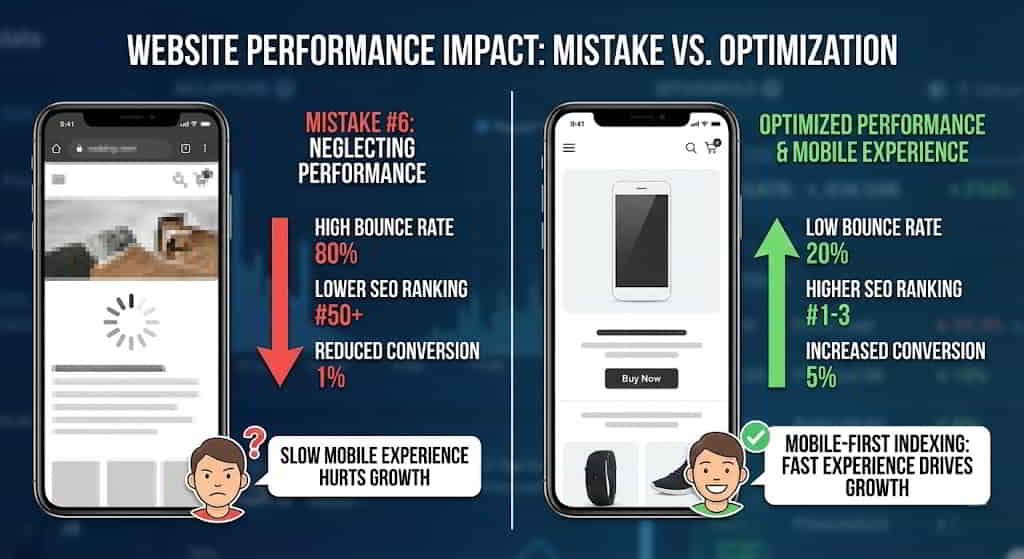
Mistake #6: Neglecting Website Performance and Mobile Experience
Many businesses underestimate how much performance affects results.
Impact of Poor Performance:
- Higher bounce rates
- Lower SEO rankings
- Reduced conversion rates
With mobile-first indexing, slow or unstable mobile experiences directly hurt growth.
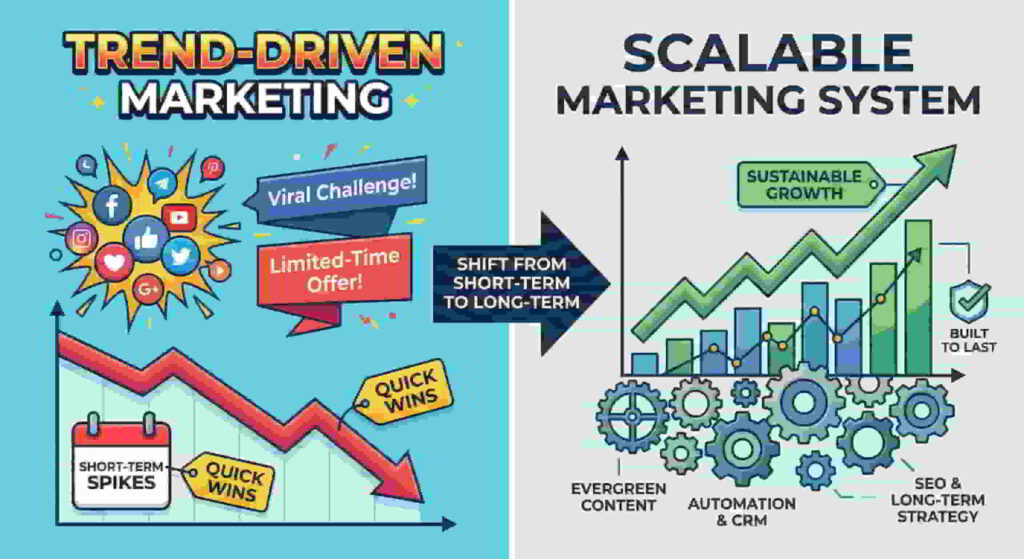
Mistake #7: Chasing Trends Instead of Building Systems
Jumping on every new platform or tactic creates fragmented marketing efforts.
Risks:
- Inconsistent brand presence
- Shallow execution
- Short-lived results
Sustainable growth comes from repeatable systems, not one-off campaigns.
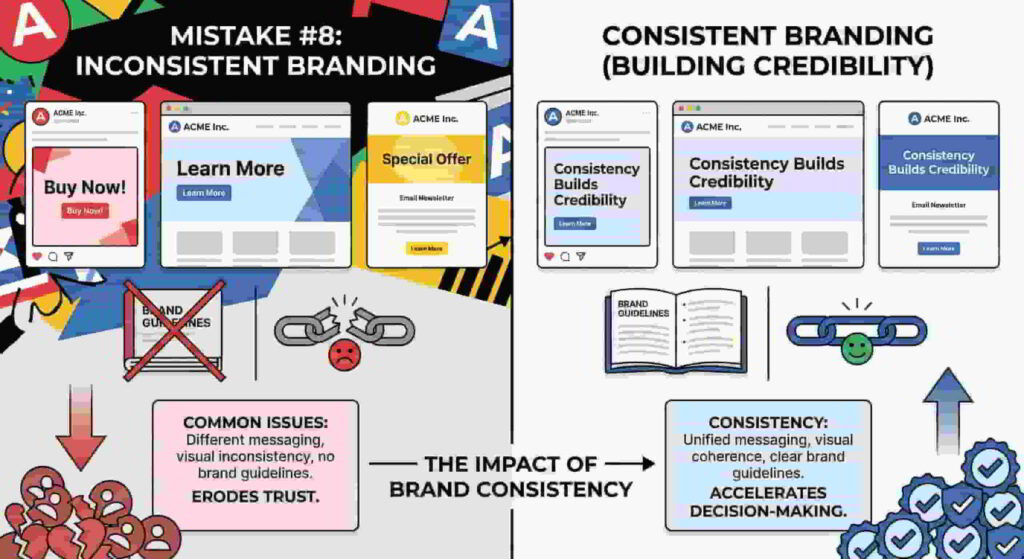
Mistake #8: Inconsistent Branding Across Channels
Inconsistency erodes trust faster than poor design.
Common Issues:
- Different messaging on ads vs website
- Visual inconsistency across platforms
- No brand guidelines
Consistency builds credibility and accelerates decision-making.
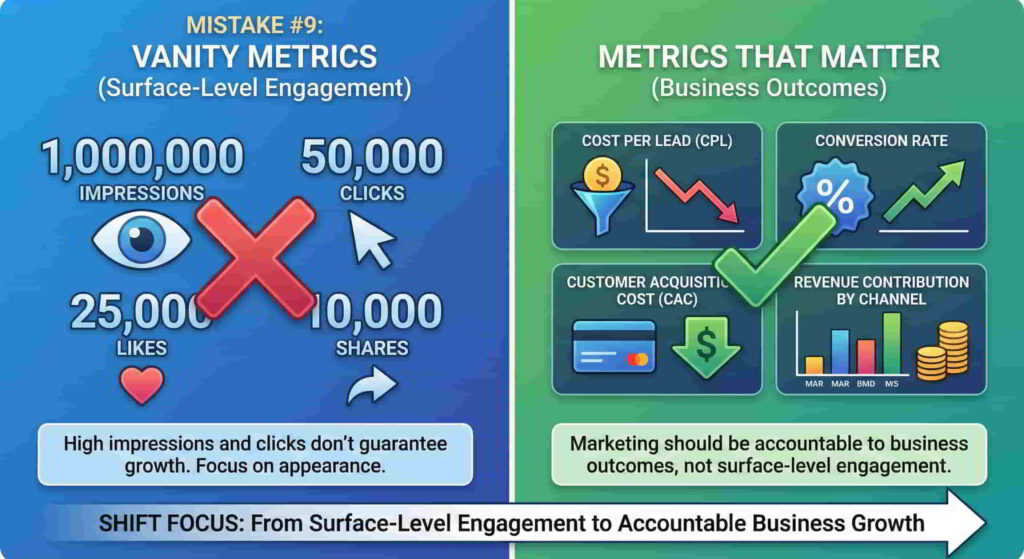
Mistake #9: Focusing on Vanity Metrics Instead of Business Metrics
High impressions and clicks don’t guarantee growth.
Metrics That Matter:
- Cost per lead
- Conversion rate
- Customer acquisition cost
- Revenue contribution by channel
Marketing should be accountable to business outcomes, not surface-level engagement.
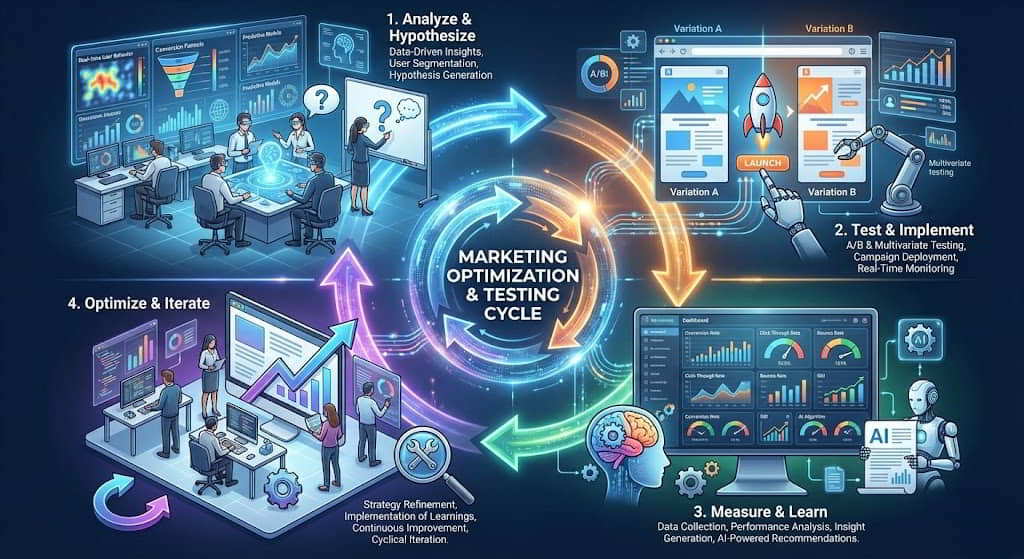
Mistake #10: Not Optimizing and Iterating Continuously
Many campaigns are launched—and then forgotten.
Why Optimization Matters:
- Market conditions change
- User behavior evolves
- Competition increases
Continuous testing and optimization turn average campaigns into high-performing growth engines.
How Avoiding These Mistakes Unlocks Scalable Growth
When businesses eliminate these growth issues, they gain:
- Better ROI from existing budgets
- Higher-quality leads
- Stronger brand trust
- Predictable, scalable results
Avoiding mistakes often delivers faster gains than adding new channels.
How DBS Helps Businesses Avoid Costly Marketing Errors
At DBS, we help organizations build data-driven, performance-focused digital marketing strategies.
Our Approach:
- Strategy-first planning
- Analytics and performance tracking
- Conversion-focused execution
- Scalable growth frameworks
We ensure marketing investments deliver real business results.
Conclusion: Smart Marketing Starts With What You Avoid
Success in digital marketing isn’t just about adopting the latest tools—it’s about avoiding the mistakes that quietly undermine growth.
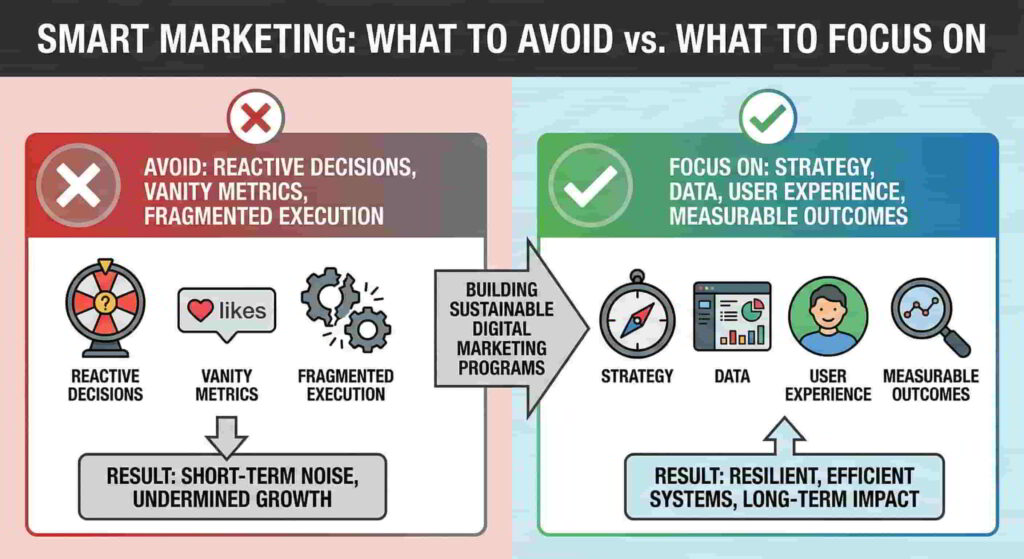
By focusing on strategy, data, user experience, and measurable outcomes, businesses can build digital marketing programs that scale sustainably.
Avoiding reactive decisions, vanity metrics, and fragmented execution helps teams stay focused on what truly drives results. With clear priorities and disciplined optimization, organizations can create marketing systems that are resilient, efficient, and designed for long-term impact rather than short-term noise.
This clarity allows marketing efforts to compound over time, turning consistent execution into a dependable engine for sustainable growth.
Not sure which marketing mistakes are limiting your growth?
Let DBS help you identify gaps and build a smarter growth strategy.