

Performance Is No Longer Optional
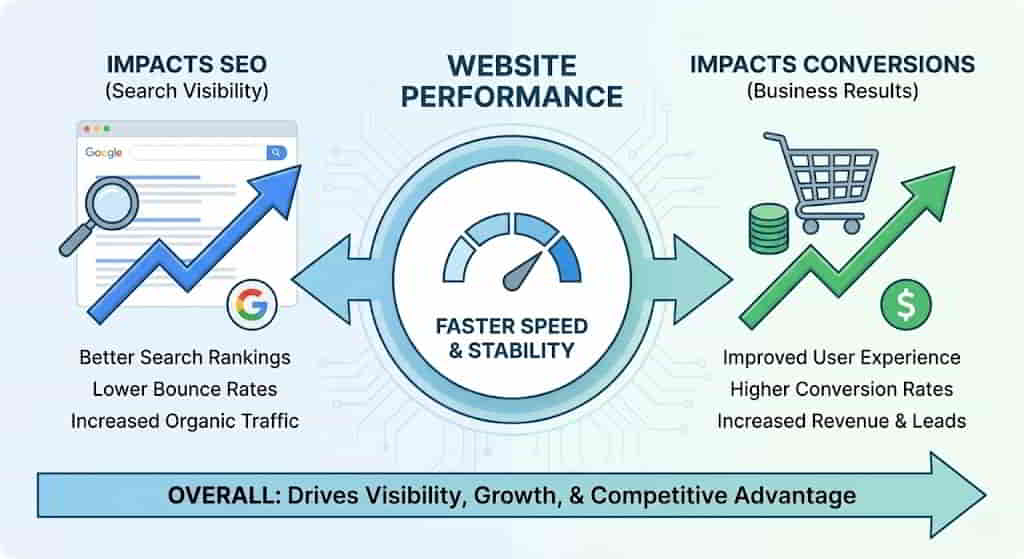
In today’s digital-first environment, a website is often the first interaction a customer has with your brand. But design alone is not enough. Website performance—how fast, stable, and responsive your site is—directly impacts both search engine rankings and conversion rates.
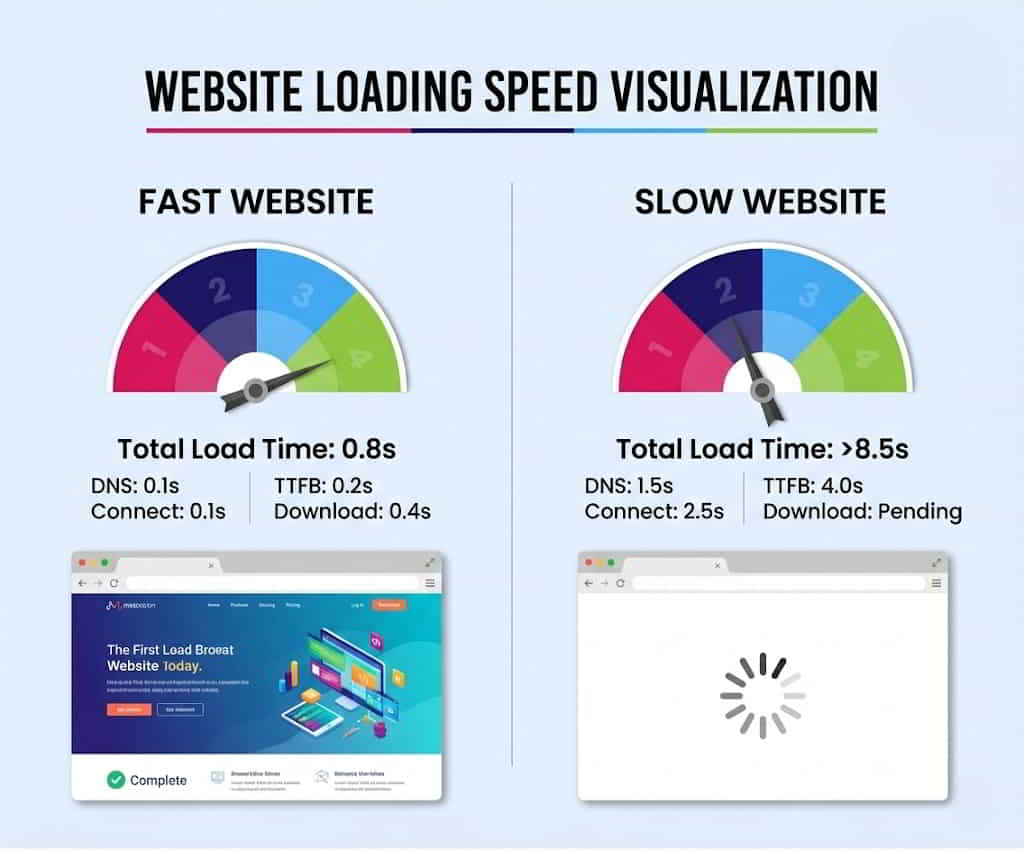
Search engines prioritize fast, user-friendly websites, and users abandon slow pages within seconds. This makes performance a critical business growth factor, not just a technical concern.
What Is Website Performance?
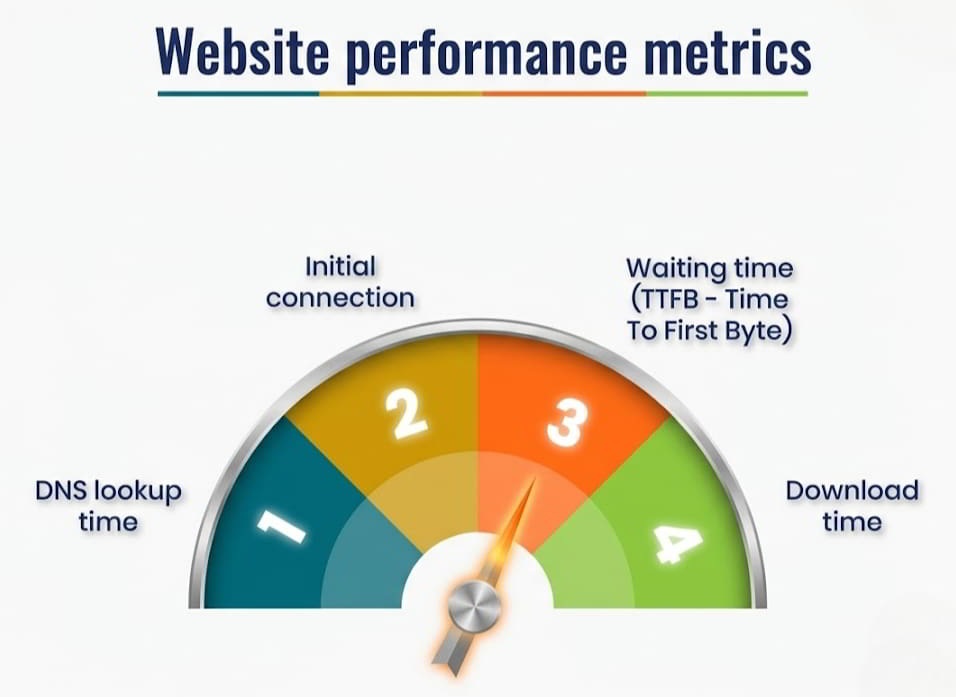
Website performance refers to how efficiently a website loads and responds to user interactions across devices and networks.
Key performance indicators include:
- Page load speed
- Interactivity and responsiveness
- Visual stability
- Mobile performance
- Server response time
These metrics collectively influence both SEO visibility and user behavior.
How Website Performance Affects SEO
Search engines, especially Google, use performance signals as ranking factors. Poor performance leads to lower visibility, reduced crawl efficiency, and weaker search rankings.
Core Web Vitals and Their SEO Impact
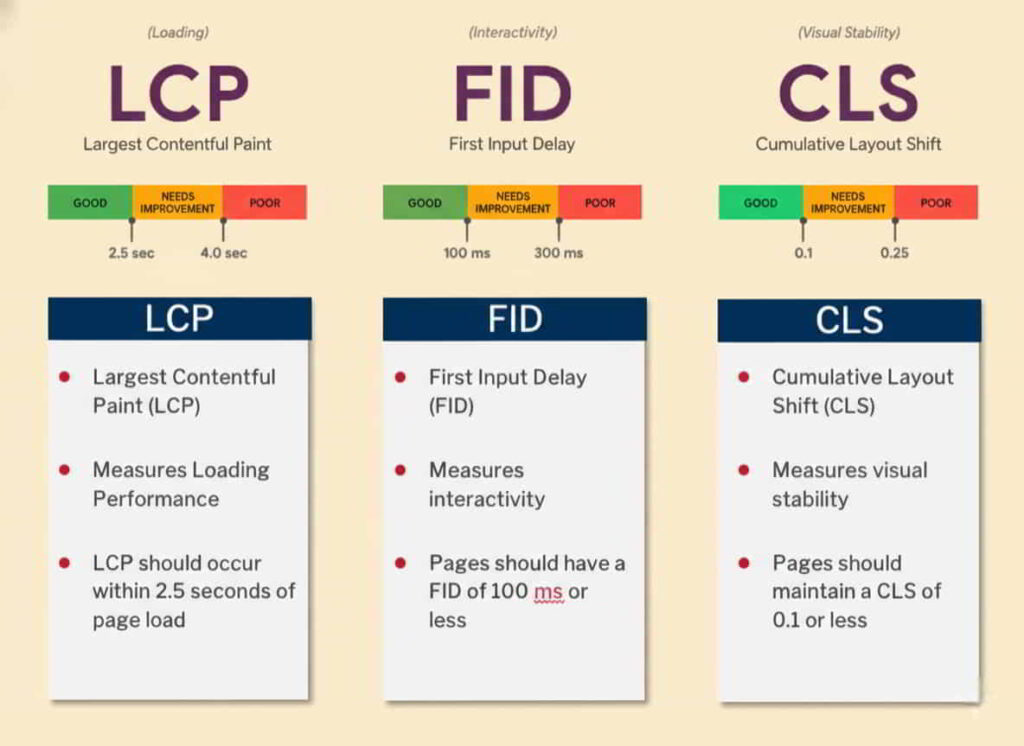
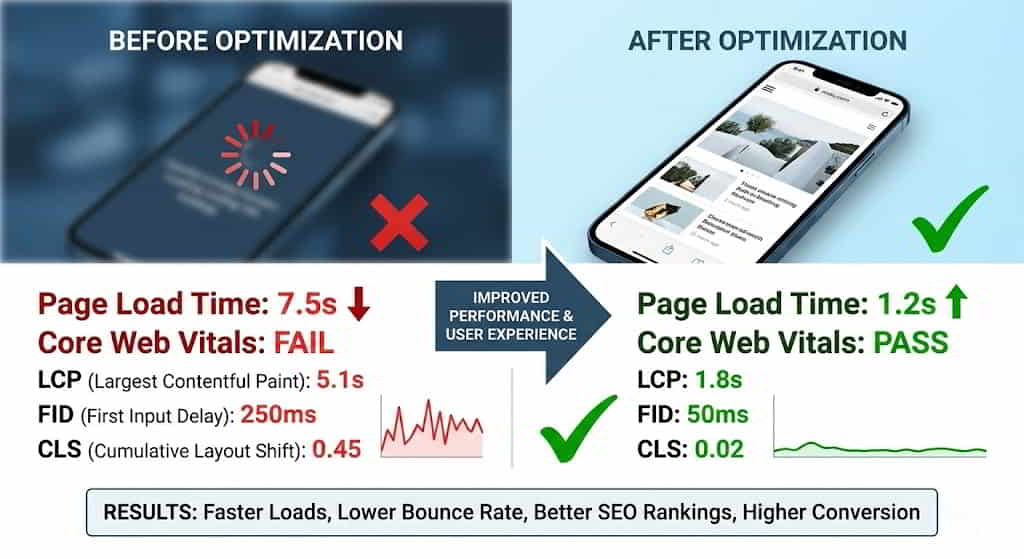
Google’s Core Web Vitals are performance metrics designed to measure real user experience.
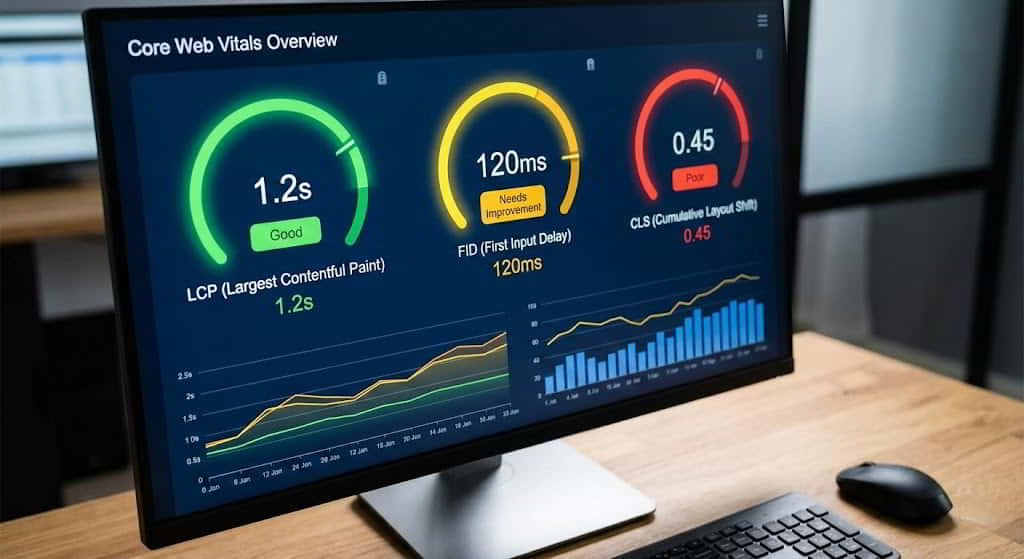
Key Metrics:
- Largest Contentful Paint (LCP): Loading performance
- First Input Delay (FID): Interactivity
- Cumulative Layout Shift (CLS): Visual stability
Websites that meet Core Web Vitals benchmarks are more likely to rank higher in competitive search results.
Page Speed and Search Rankings
Page speed affects:
- Crawl budget efficiency
- Mobile-first indexing
- Bounce rates
Slow pages cause search engines to deprioritize content, especially on mobile devices where performance expectations are higher.

How Website Performance Impacts Conversions
SEO brings traffic—but performance converts traffic.
A fast website:
- Keeps users engaged
- Builds trust
- Reduces friction in the buyer journey
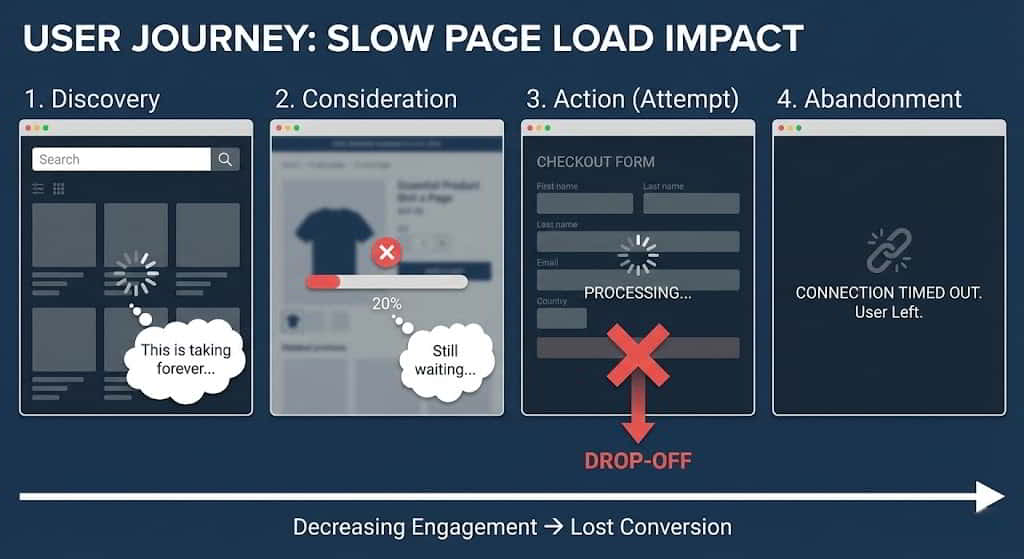
Even a one-second delay in page load time can significantly reduce conversion rates.
Performance and User Experience
Users expect:
- Pages to load within 2–3 seconds
- Smooth scrolling and interaction
- Stable layouts without sudden shifts
When these expectations are not met, users abandon the site before taking action.
Mobile Performance and Conversion Rates
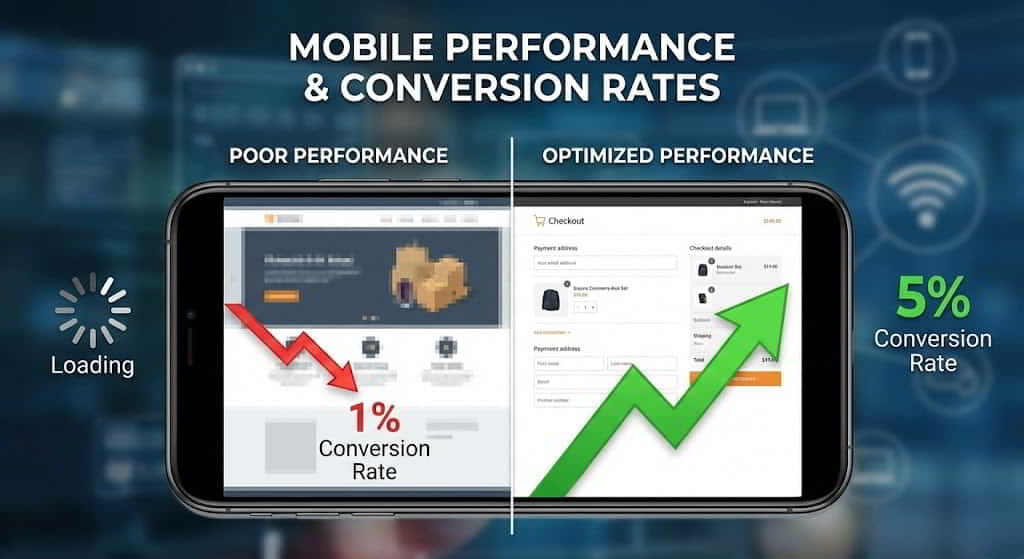
Mobile traffic dominates most industries, yet mobile performance often lags behind desktop.
Key challenges:
- Heavy images
- Unoptimized scripts
- Poor hosting infrastructure
Optimizing mobile performance is critical for both SEO and lead generation.
Common Website Performance Issues
Many business websites underperform due to avoidable technical issues:
- Unoptimized images and media
- Excessive JavaScript and CSS
- Poor hosting environments
- Lack of caching
- Bloated WordPress themes and plugins
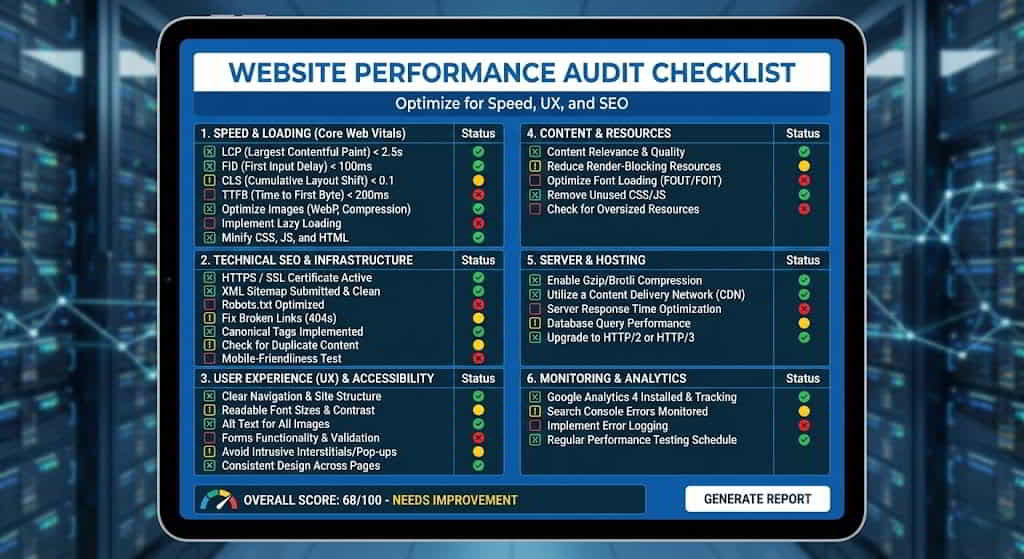
Identifying these issues early prevents long-term SEO and revenue loss.
How to Improve Website Performance for SEO and Conversions
1. Optimize Core Web Vitals
Focus on:
- Image compression and lazy loading
- Efficient font loading
- Reducing layout shifts
- Improving server response times
2. Improve Page Speed
Practical optimizations include:
- CDN implementation
- Browser caching
- Minification of CSS and JavaScript
- Removing unused plugins
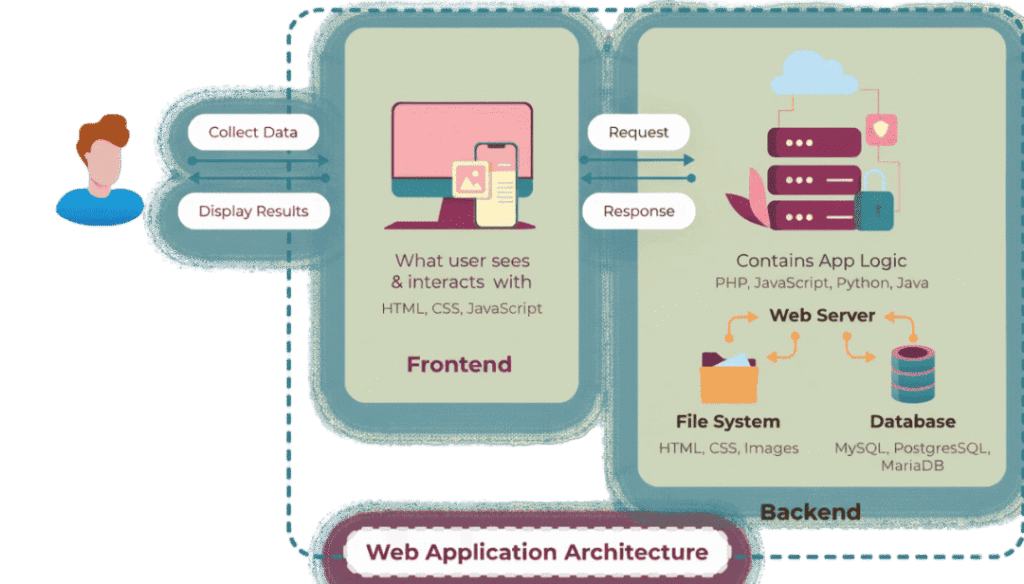
3. Choose Performance-First Web Architecture
A scalable, performance-focused architecture ensures long-term results:
- Lightweight themes
- Clean frontend code
- Optimized hosting infrastructure
Why Website Performance Is a Business Growth Lever
High-performing websites deliver:
- Better search visibility
- Lower bounce rates
- Higher engagement
- Improved conversion rates
- Stronger brand credibility
Performance optimization directly supports revenue growth, not just technical compliance.
How DBS Helps Optimize Website Performance
At DBS, we design and optimize websites with performance at the core.
Our Focus Areas:
- Core Web Vitals optimization
- Page speed improvements
- SEO-friendly website architecture
- Conversion-focused performance tuning
- WordPress and Elementor optimization
We align technical performance with business outcomes.
Conclusion: Performance Drives Visibility and Revenue
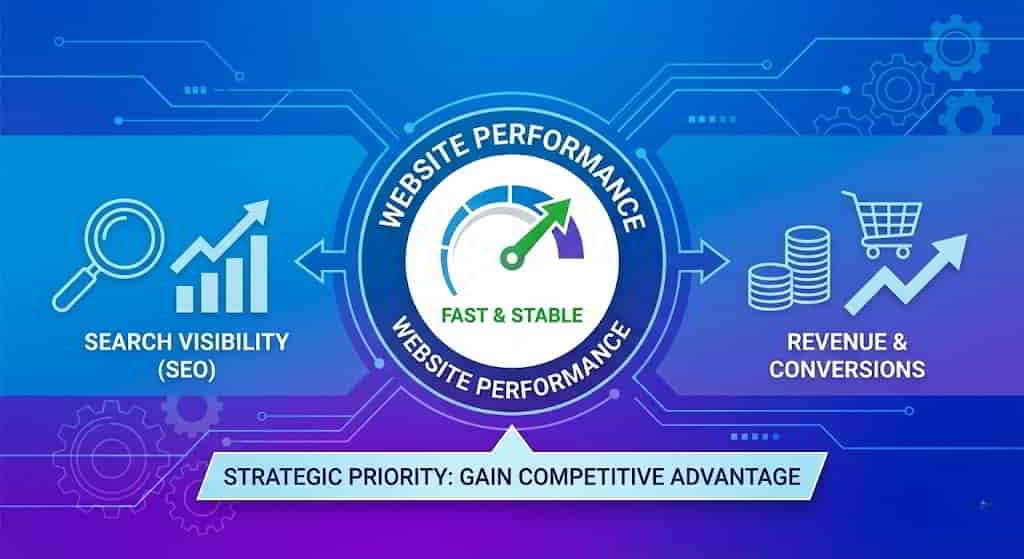
Website performance sits at the intersection of SEO and conversions. A fast, stable, and responsive website ranks better, retains users longer, and converts more effectively.
Businesses that treat performance as a strategic priority—not an afterthought—gain a measurable competitive advantage.
Performance-first websites reduce bounce rates, improve user experience across devices, and support consistent growth as traffic scales. By continuously monitoring and optimizing speed, stability, and reliability, organizations turn their websites into high-performing digital assets that drive both visibility and revenue over the long term.
Is your website holding back your SEO and conversions?
Let DBS help you build a high-performance website optimized for growth.