

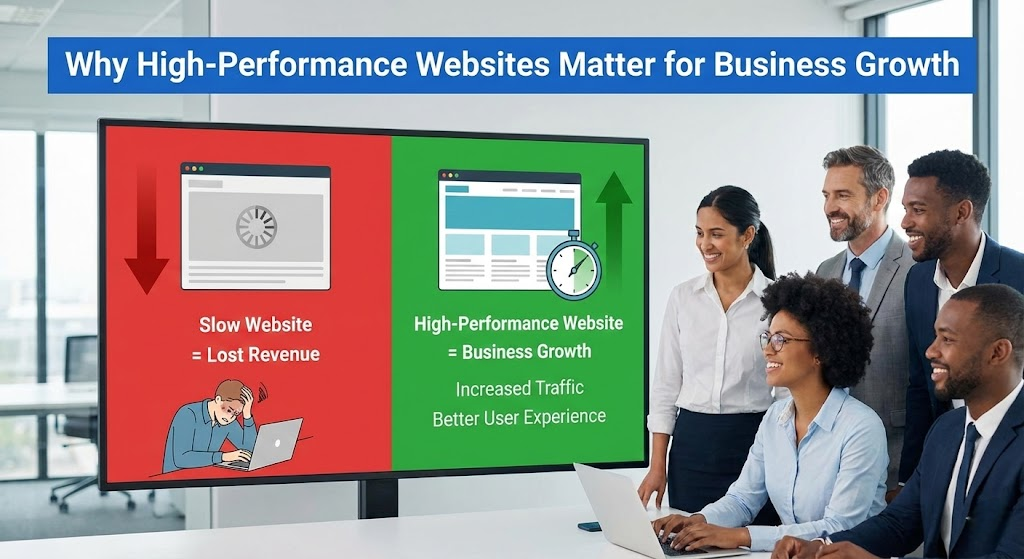
Website Performance Is a Business Metric
In today’s digital-first environment, a website is more than a brand touchpoint—it’s a revenue engine. Businesses that invest in high performance websites consistently see stronger engagement, higher conversion rates, and better long-term growth. On the other hand, slow, unstable, or poorly optimized websites quietly erode trust, visibility, and revenue.
Website performance is no longer a technical concern—it is a business growth lever.
Speed, stability, and usability directly influence how customers perceive your brand and whether they choose to engage or leave.
What Defines a High-Performance Website?
High-performance websites are engineered to deliver speed, stability, usability, and scalability across all devices and user conditions.

A truly high-performance website excels in:
- Fast load times across devices
- Smooth interactions with minimal delays
- Stable layouts without unexpected shifts
- Security and uptime
- Scalability under traffic growth
Performance is not just technical—it directly affects user trust and business outcomes.
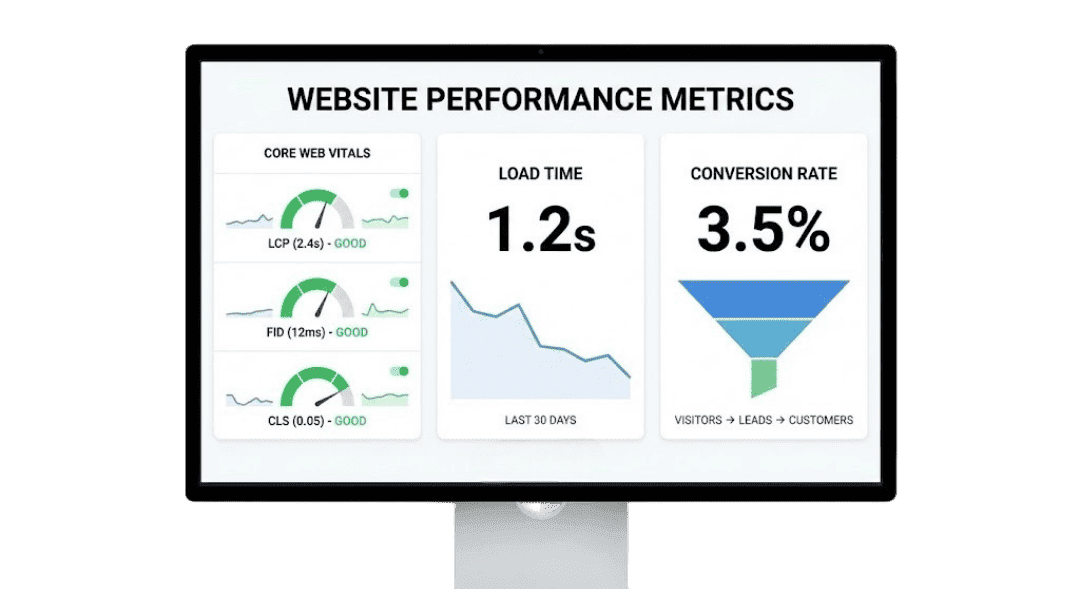
How Website Performance Impacts Business Growth
1. Faster Websites Improve User Experience
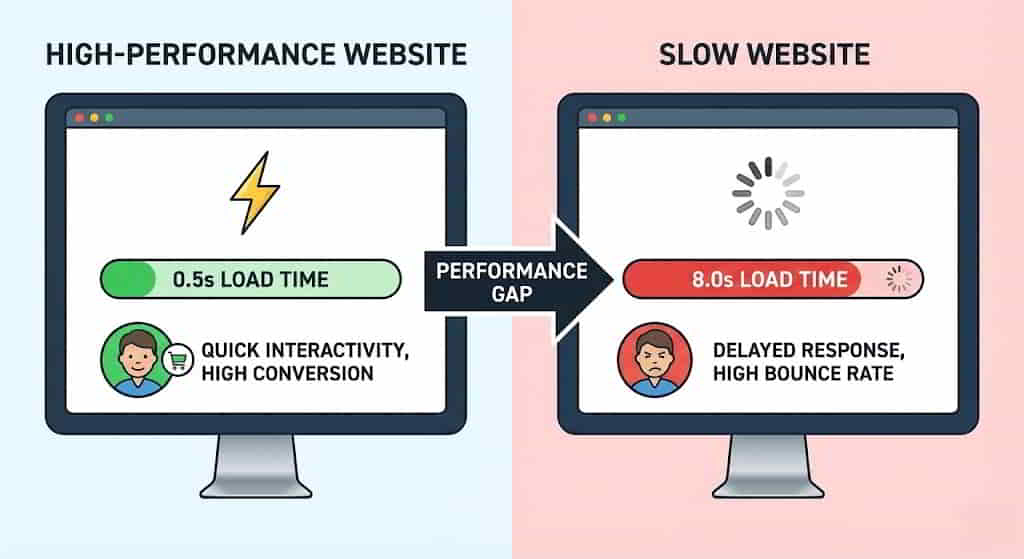
Users expect websites to load quickly. Slow pages lead to:
- Higher bounce rates
- Lower session duration
- Reduced engagement
Fast websites keep users focused, engaged, and moving toward conversion.
2. Performance Directly Influences Conversions
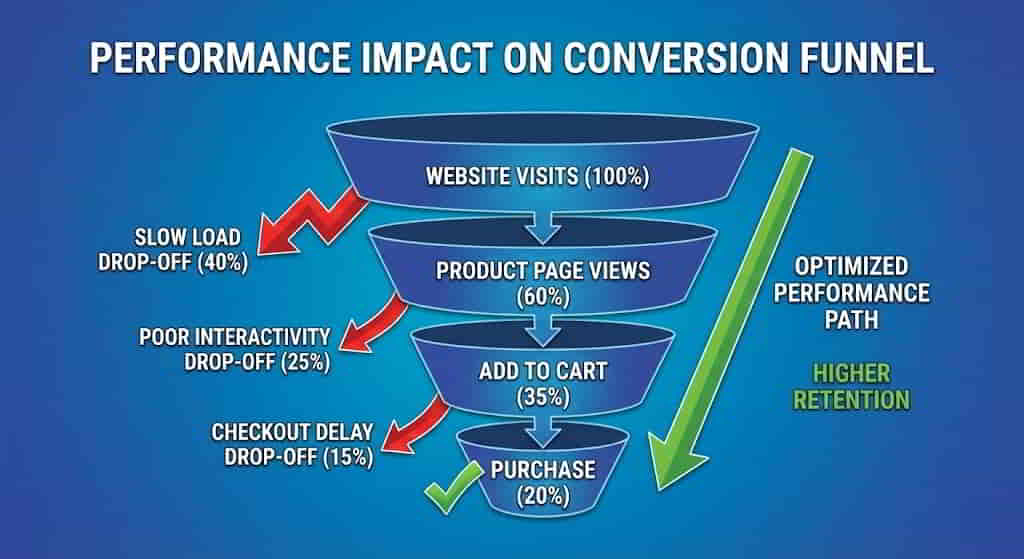
Every second of delay impacts revenue. High-performance websites:
- Reduce friction in the user journey
- Improve form submissions and sign-ups
- Increase eCommerce and lead conversion rates
Performance optimization directly supports business growth.
3. SEO Rewards High-Performance Websites
Search engines prioritize:
- Page speed
- Mobile performance
- Core Web Vitals
A well-optimized website ranks higher, drives organic traffic, and lowers dependency on paid channels.
Why Fast Websites Outperform Slow Ones in Search Results
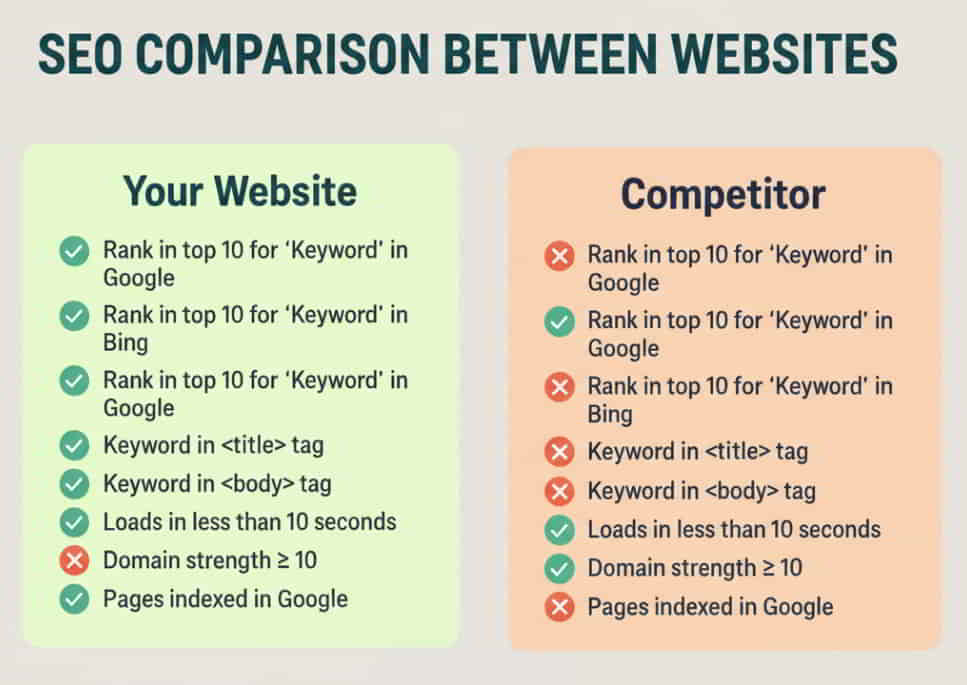
Search engines explicitly reward performance. Google’s ranking algorithms factor in:
- Page speed
- Mobile usability
- Core Web Vitals (LCP, INP, CLS)
Website optimization improves visibility, organic traffic, and lead flow—reducing dependence on paid ads.
A slow website pays twice:
- Lower rankings
- Higher advertising costs
Why Website Optimization Is No Longer Optional
Modern users access websites across:
- Mobile devices
- Tablets
- High-resolution desktops
Without continuous website optimization, even well-designed sites lose effectiveness over time due to heavier content, plugins, and scripts.
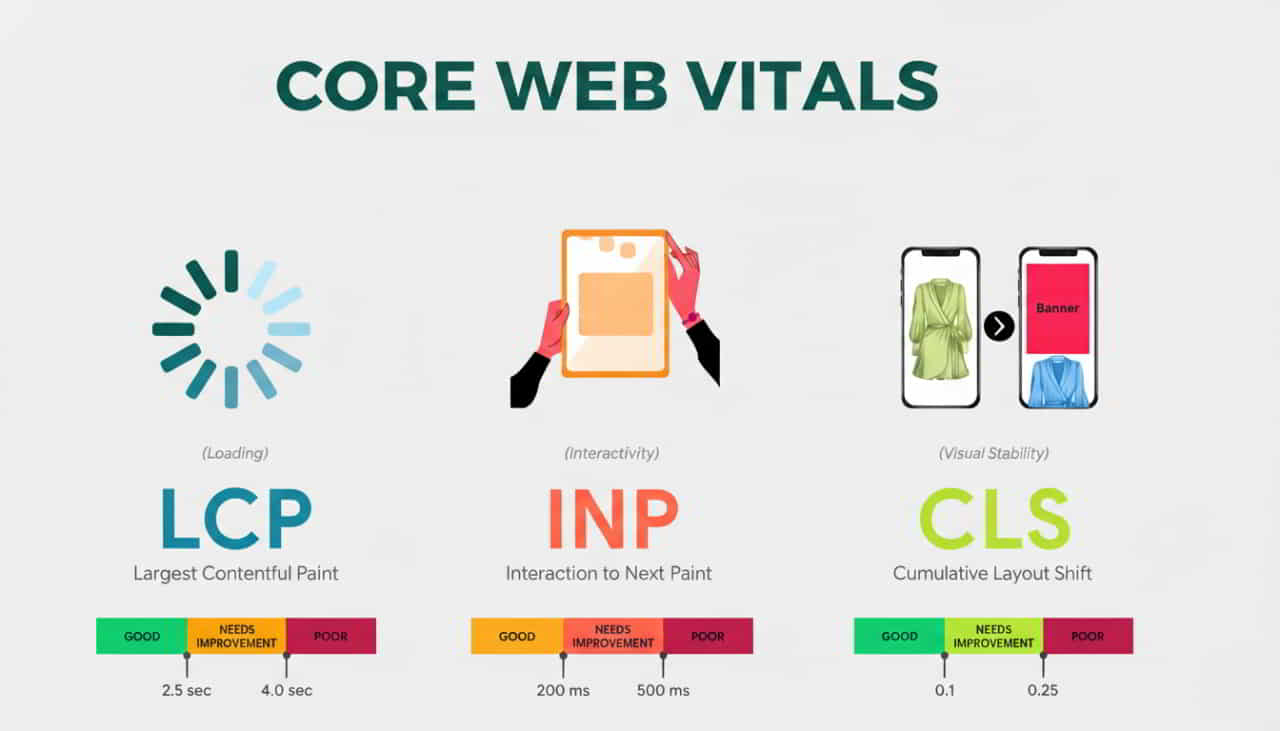
Core Web Vitals: The New Performance Standard
High-performance websites are built around Core Web Vitals:
Largest Contentful Paint (LCP)
Measures how quickly the main content loads.
Interaction to Next Paint (INP)
Measures responsiveness to user interactions.
Cumulative Layout Shift (CLS)
Measures visual stability during loading.
Failing these metrics negatively impacts:
- SEO rankings
- User trust
- Conversion performance
Website Optimization: A Continuous Business Process
Website performance is not a one-time fix. As businesses grow, websites naturally become heavier due to:
- New content
- Third-party tools
- Marketing scripts
- Design enhancements
Without ongoing website optimization, performance degrades silently.
High-growth companies treat optimization as:
- An ongoing discipline
- A monitored KPI
- A core part of digital strategy
Key Elements of High-Performance Websites
1. Optimized Frontend Performance
- Clean, lightweight code
- Efficient CSS and JavaScript loading
- Image compression and lazy loading
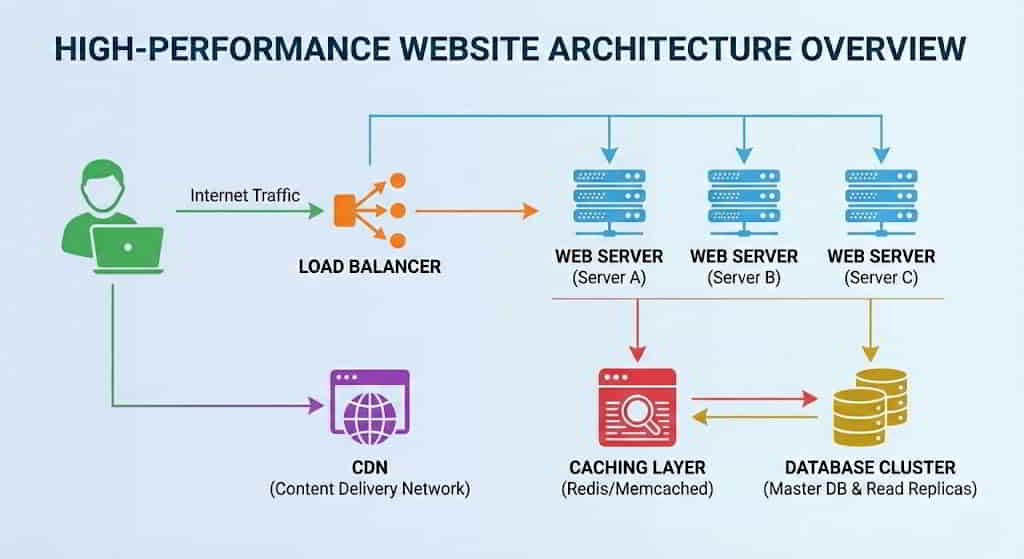
2. Scalable Backend and Hosting
- Reliable server infrastructure
- Caching and CDN integration
- Optimized database performance
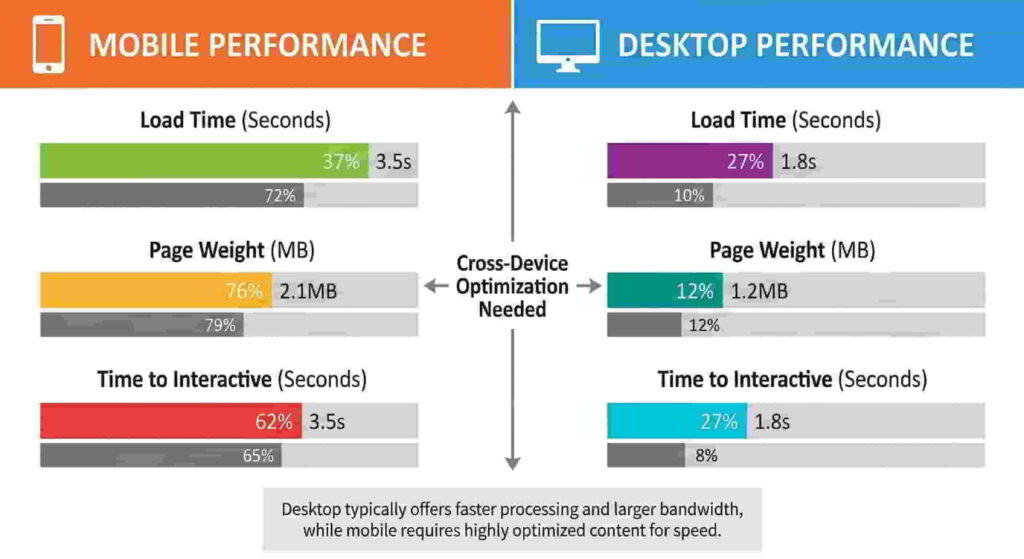
3. Mobile-First Design Approach
- Responsive layouts
- Touch-friendly interactions
- Performance parity across devices
Common Performance Mistakes That Hurt Growth
Many business websites struggle due to:
- Heavy themes and unoptimized plugins
- Poor hosting environments
- No performance monitoring
- Ignoring Core Web Vitals
These issues silently reduce traffic, engagement, and revenue.
High-Performance Websites as a Competitive Advantage
Performance is no longer just about keeping up—it’s about standing out.
Companies with high-performance websites:
- Convert visitors more efficiently
- Rank higher in competitive markets
- Deliver better customer experiences
- Scale digital initiatives faster
In crowded digital spaces, performance becomes a differentiator.
How DBS Builds High-Performance Websites
At DBS, performance is engineered—not added later.
Our Approach Includes:
- Performance-first UI/UX design
- Optimized WordPress and Elementor builds
- Core Web Vitals optimization
- Clean, scalable architecture
- Continuous performance monitoring
We design websites that load fast, rank well, and convert consistently.
Long-Term Business Benefits of Performance Investment
Investing in high performance websites delivers:
- Higher lifetime value per visitor
- Lower acquisition costs
- Better brand perception
- Stronger conversion consistency
- Future-proof scalability
Performance compounds—small gains today deliver exponential results over time.
Conclusion: Performance Is the Foundation of Digital Growth
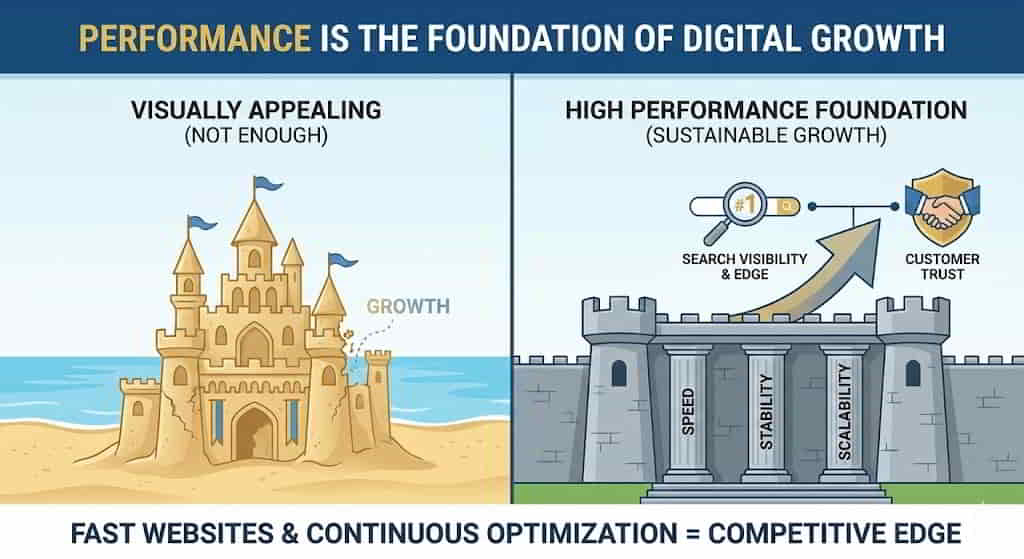
A visually appealing website is not enough. Sustainable growth depends on high performance websites that deliver speed, stability, and scalability.
Businesses that prioritize fast websites and continuous website optimization gain a competitive edge—both in search visibility and customer trust.
By investing in performance-first development, organizations ensure their digital platforms are built to convert, scale, and support long-term business objectives.
Is your website slowing down your growth?
Partner with DBS to build or optimize a high-performance website designed for results.